Mini-split Service in Greensboro, FL
Mini-split service in Greensboro, FL includes installation, repair, replacement, maintenance, and emergency support. Services emphasize proper sizing, expert installation, and routine care to maintain reliability in humid conditions. Diagnostics, common issues, and service procedures are outlined, along with parts, warranties, and availability. Benefits include improved indoor air quality, zoned comfort, energy efficiency, and humidity control. The guide also provides recommended maintenance schedules and homeowner tips to extend system lifespan.
Mini-split Service in Greensboro, FL
Mini-split Service in Greensboro, FL provides full-service support for ductless heating and cooling systems: installation, repair, replacement, maintenance, and emergency response. In a warm, humid climate like Greensboro, these systems deliver targeted comfort, lower energy use, and improved indoor air quality—but they require correct sizing, skilled installation, and routine care to perform reliably. This page explains common mini-split needs in Greensboro homes, what to expect during diagnostics and service, parts and warranty considerations, and practical maintenance advice so you can make an informed decision.
Why mini-split service matters in Greensboro, FL
Greensboro experiences long, humid summers and mild winters. High humidity and frequent pollen loads increase strain on HVAC equipment, accelerate coil fouling, and raise the risk of mold and condensate issues. Proper mini-split service helps prevent costly breakdowns during peak cooling months, preserves system efficiency, and protects indoor air quality for households sensitive to allergens or respiratory issues.
Common mini-split issues in Greensboro, FL
- Weak airflow or uneven cooling - Often caused by dirty filters, blocked indoor blower fans, or improperly sized units.
- Refrigerant leaks or low charge - Leaks reduce cooling capacity and can cause compressor damage if not found and repaired.
- Drainage and condensate problems - Humid conditions can clog drains or overflow condensate pans, causing water damage and mold growth.
- Electrical or control failures - Faulty wiring, failing capacitors, or control-board issues can cause intermittent operation or error codes.
- Outdoor unit problems - Corrosion, debris buildup, or fan motor failure on the outdoor condenser reduces performance.
- Inverter or compressor faults - Inverter-driven compressors require specialized diagnosis and may need component-level or full-compressor replacement.
- Age-related inefficiency - Older units operating on phased-out refrigerants or with low SEER ratings lose efficiency and become more repair-prone.
Types of mini-split services offered
- Installation and system design: Load calculations, indoor head selection and placement, line-set routing, electrical and condensate planning, and startup commissioning.
- Repair and troubleshooting: Leak detection and repair, compressor and fan motor service, control-board replacement, sensor and thermostat repair, and condensate system fixes.
- Replacement and upgrades: Full system replacement for aging equipment, retrofit to modern refrigerants (when appropriate), and upsizing or adding zones.
- Preventive maintenance: Seasonal tune-ups, filter and coil cleaning, refrigerant checks, electrical safety inspections, and performance optimization.
- Emergency service: Rapid-response diagnostics for no-cool or no-heat emergencies, especially critical during summer heat waves.
How diagnostics and service typically proceed
- Initial review of symptoms, error codes, and recent system history.
- Visual inspection of indoor and outdoor units, line-sets, electrical connections, and condensate paths.
- Airflow and temperature measurements at the indoor head and return/room.
- Refrigerant pressure checks and leak detection using electronic leak detectors or soap testing.
- Electrical testing of capacitors, contactors, and control boards; verifying correct voltage and proper safeties.
- Performance assessment under load to confirm repair or to inform replacement recommendations.Technicians document findings, explain necessary repairs or replacement options, and provide an itemized plan for parts and labor.
Typical repair solutions and replacement triggers
Repairs can include refrigerant leak repair and recharge (using approved refrigerants), fan motor or PCB replacement, sensor or remote-control fixes, condensate pump or drain line cleaning, and control recalibration. Replacement is recommended when units are beyond typical service life (generally 10-15 years), require frequent major repairs, operate on obsolete refrigerants, or no longer meet comfort or efficiency needs. Proper sizing during replacement prevents short-cycling and humidity issues common in humid climates.
Parts, warranties, and parts availability
Mini-split systems carry two layers of protection: manufacturer warranties and installer warranties. Manufacturer warranties typically cover compressors and major components for a defined period, while labor warranties vary by installer. In Greensboro, technicians source OEM and approved aftermarket parts compatible with major brands; many common components like filters, fan motors, PCB boards, and sensors are readily available. Refrigerant availability depends on the system type; newer systems use R-410A or newer refrigerants, while older R-22 systems are increasingly costly to service and may prompt replacement.
Technicians working on refrigerants should be EPA-608 certified and follow federal and state guidelines for handling and reclamation. Warranty repairs often require documented maintenance records and professional service to maintain coverage.
Benefits for indoor air quality and energy savings
- Improved air quality: Ductless systems reduce dust and mold transfer from ductwork. High-efficiency filters, regular coil cleaning, and proper condensate management reduce allergens and microbial growth—particularly important in Greensboro's humid environment.
- Zoned comfort: Ability to control temperatures room-by-room reduces overcooling and increases occupant comfort.
- Energy savings: Properly sized and installed mini-splits with inverter compressors are highly efficient for zone-based cooling and can cut energy use compared to older single-zone or poorly maintained systems. Savings are maximized when systems are maintained and controllers are used to avoid unnecessary runtime.
- Humidity control: Correctly commissioned systems manage humidity better than undersized or misconfigured units, improving comfort and preventing mold issues.
Maintenance schedule and homeowner recommendations
- Clean or replace washable filters every 1-3 months during heavy use.
- Schedule professional inspections at least once a year—preferably before spring cooling season—to check refrigerant charge, electrical integrity, and coil cleanliness.
- Keep outdoor units clear of vegetation, debris, and storage to ensure airflow and reduce corrosion risk.
- Monitor condensate lines and pans for clogs or algae; flush and treat as needed.
- Use recommended controller settings and program zones to match occupancy patterns for efficiency.
- If units are older or require frequent refrigerant top-ups, evaluate replacement options that use modern refrigerants and higher SEER ratings.
Service area and booking process
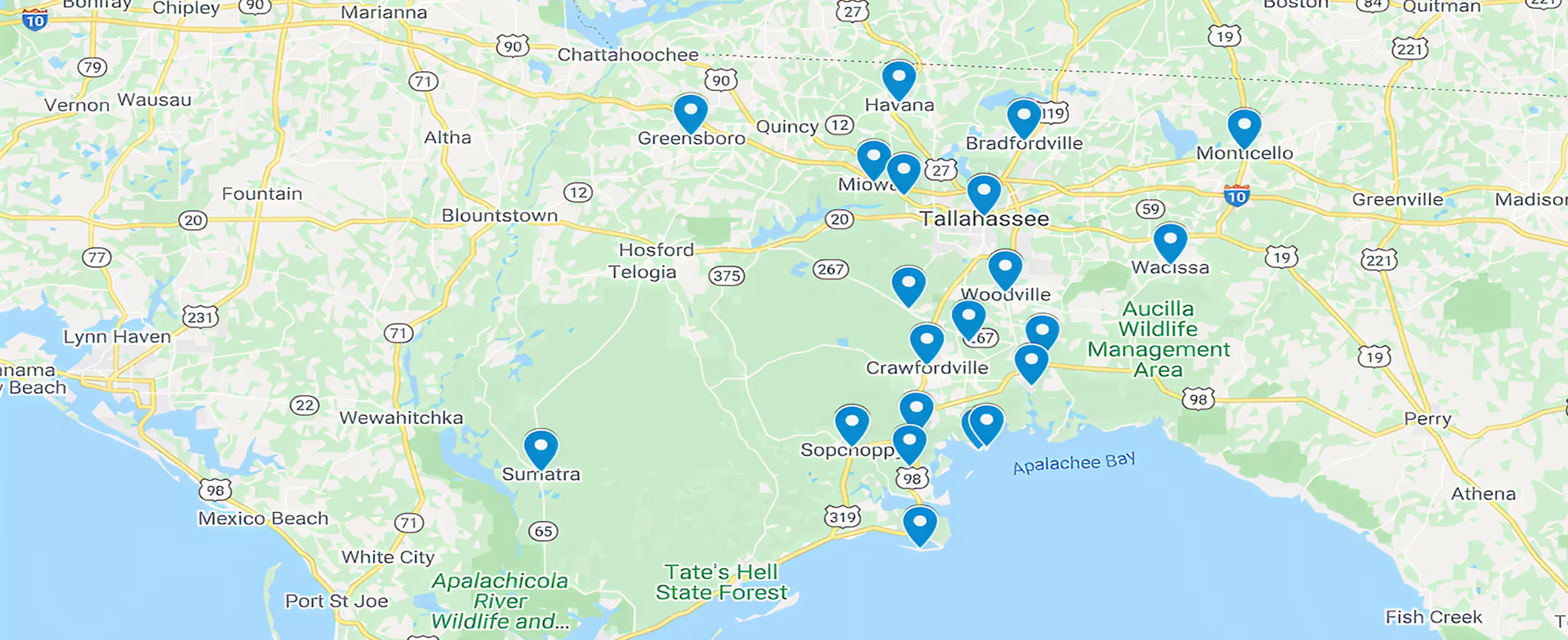
Services are focused on Greensboro, FL and nearby Gadsden County neighborhoods where local climate and building types influence system needs. Typical booking and service workflow includes an initial phone or online inquiry, scheduling an on-site assessment, a written estimate that outlines repairs or replacement options, and agreed-upon scheduling for work. Service visits include documentation of performed work, testing to confirm performance, and guidance on ongoing maintenance and warranty requirements.
Technician expertise and quality assurance
Technicians servicing mini-splits in Greensboro are trained in ductless technology, refrigerant handling, electrical safety, and correct installation practices for local climate conditions. Expect expertise in load calculation, line-set routing for minimal thermal loss, inverter diagnostics, and indoor air quality considerations specific to humid, pollen-prone environments. Quality assurance includes post-service performance checks, parts verification, and clear warranty documentation to protect homeowners.
ConclusionProper mini-split service in Greensboro, FL keeps systems reliable through humid summers, protects indoor air quality, and maintains energy-efficient operation. Whether installing a new multi-zone system, repairing a failed component, or scheduling routine maintenance to prevent emergency breakdowns, informed decisions about diagnostics, parts, warranties, and preventive care will extend equipment life and comfort in local homes.
hear what our satisfied clients have to say
.avif)

I have nothing but great things to say about this company! From the initial call to trouble shoot our old system to the installation of the new system. Maya was awesome and patient with us and the bank. Stratton, Wilton, and Austin did the removal and install of the systems and they were professional and proficient. I will be recommending this company to everyone and anyone! Thank you for making this less stressful then it needed to be. I'm very grateful for the help and comfort they have given me and my family.
We’ve had issues with our a/c unit freezing up off and on for a month or so. Aden from Keith Key came out and checked our system out. He fixed an issue with the bypass valve and also tuned our fan. Additionally we also replaced our thermostats with new T10’s. He took his time and helped me connect all of them to the WiFi and the app.Aden is very friendly and knowledgeable. I haven’t had an issue with my system since. He was also willing to accept the assistance of our overly helpful shih tzu. Call Keith Key and Aden for any issues with hvac systems, they can get it fixed!
Tryston was amazing! So knowledgeable, pleasant and respectful. Keith Key H/A will forever have my family's business
We had a tenant with no heat during the recent 29 degree weather. I called Keith Key Heating and Air before office hours and left my infomation with their answering service. I got a call back from the office promptly at 8:00 a.m. They were able to schedule us for service the same day. The technician arrived at noon, diagnosed the issue and made the repair. The price was quite reasonable. Everyone that we dealt with was friendly, professional and knowledgeable. I would highly recommend them and will be using them again in the future. Thanks Keith Key Heating & Air!!
Heat wasn't working after the sleet storm and being without power for 18 hours. Keith Key sent Trystan the same day as my call. He did a great job (very personable) and got it repaired in no time. Many thanks!
Keith Key HVAC is wonderful! They service our HVAC and just helped me with a super stressful heating issue while I was out of state. They are very organized and professional, and take extra time to explain and follow up. I just love them!
We've called on Keith Key Heating and Air twice for help. Both times, they responded quickly, and were able to make repairs quickly. The techs we've dealt with have been friendly, reliable, professional and knowledgeable. And they don't dig in your pocket like some have been known to do. I honestly don't know what more we could ask for. A solid 10 of 10, and we highly recommend.
Had to replace my AC and Heating unit. Keith Key Heating and Air was very helpful in finding the right unit money wise for me. The young men they sent was courteous and knowledgeable. They made sure everything was up to my standards before they left. If you have trouble I would highly recommend them to you.
Keith Key regularly services both our personal home and one of our rental properties! They are good about communicating to us about the condition of the units at the rental property which is such a relief! We have had to call them for 2 emergencies and both times the techs appeared happy to be there helping us despite being on the weekend! 10/10 recommend.
Service Areas