IAQ Installation in Crawfordville, FL
Comprehensive IAQ installation services in Crawfordville, FL tailor indoor air quality improvements to coastal, humid conditions. The page outlines local challenges such as high humidity, salt-laden air, and seasonal pollen, and explains testing, needs assessment, and system selection. It covers integration with existing HVAC, including air purifiers, UV germicidal lamps, MERV filtration, humidification/dehumidification, and ventilation strategies. It describes a step-by-step installation process, commissioning, expected timelines, post-installation maintenance, and the measurable benefits of improved comfort, health, and energy efficiency. The page emphasizes expert testing, targeted solutions, and long-term performance.
IAQ Installation in Crawfordville, FL
Indoor air quality matters in Crawfordville, FL. With warm, humid summers, coastal salt air, and seasonal pollen from nearby pine forests, homes here are prone to mold growth, high humidity, and allergen buildup. An IAQ installation tailored to your home helps reduce allergens, control moisture, and integrate air cleaning systems with your existing HVAC for reliable, whole-house performance.
Why IAQ installation is important for Crawfordville homes
Many local homes experience:
- High indoor humidity most of the year, increasing mold and dust mite risk.
- Salt-laden coastal air that can corrode outdoor equipment if not specified appropriately.
- Seasonal pollen and outdoor allergens that infiltrate through ventilation and ducts.
- Older or undersized HVAC systems that struggle to dehumidify and filter air effectively.
An IAQ installation in Crawfordville, FL addresses these specific factors by combining testing, equipment selection, and professional integration to deliver measurable improvements in comfort, health, and HVAC efficiency.
Common IAQ problems in Crawfordville, FL
- Persistent dampness, musty odors, or visible mold in crawlspaces, bathrooms, or attics
- Condensation on windows and duct surfaces
- Allergy symptoms tied to pollen, pet dander, or dust
- Excessive indoor dust and short-lived filters
- Poor ventilation or stale air in tightly sealed homes
Typical IAQ systems used and what they do
- Air purifiers (HEPA, electronic, or activated carbon) — remove particulates, smoke, and some odors
- UV germicidal lamps — in-duct microbial control to reduce bacteria, mold spores, and viruses
- Filtration upgrades (MERV-rated filters, whole-house media filters) — capture finer particles than standard filters
- Humidification/dehumidification systems — humidity control, especially whole-house dehumidification for Florida climates
- Ventilation systems (supply, exhaust, or balanced ventilation, dedicated outdoor air units) — control fresh air intake without introducing excess humidityEach component can be combined and integrated with your existing HVAC to meet your home’s specific needs.
Indoor air testing and needs assessment
A professional IAQ installation begins with testing and assessment:
- Visual inspection of HVAC equipment, ducts, attic, crawlspace, and living spaces
- Moisture and humidity mapping (spot checks and continuous monitors)
- Particle counts and particulate sampling for PM2.5/PM10 if needed
- Allergen and mold spore sampling when suspected biological contamination exists
- Carbon dioxide or ventilation performance checks to determine fresh air levels
Testing clarifies the root causes so solutions are targeted. For example, persistent high humidity may need a whole-house dehumidifier plus improved ventilation rather than just a portable air cleaner.
System selection and integration with existing HVAC
Selection balances performance, compatibility, and durability in coastal, humid environments:
- Filter upgrades: Choose appropriate MERV rating balanced with your furnace or air handler capacity. Whole-house media filters provide longer life and better capture than basic filters.
- Air purifiers: In-duct HEPA solutions or whole-home electronic air cleaners integrate directly with the air handler for centralized filtration.
- UV systems: Mounted in the return or near the coil to reduce biological growth on coils and drain pans.
- Dehumidification: Whole-house dehumidifiers paired with the ductwork, or integrated into the air handler, to maintain recommended indoor humidity (generally 40 to 50 percent in coastal climates).
- Ventilation: Balanced systems or controlled supply ventilation to meet ventilation needs without inviting uncontrolled humid air. In hot-humid climates, mechanical ventilation is selected to avoid increasing moisture load.
Equipment choices also consider corrosion resistance, protective coatings, and placement to reduce salt-air exposure and ensure long service life in Crawfordville.
Site preparation and installation steps
A professional installation follows a predictable, documented process:
- Pre-installation walk-through: Confirm access, electrical requirements, and identify potential obstacles (tight crawlspaces, attic insulation, duct condition).
- Site preparation: Clear work areas, protect floors and furnishings, and isolate pets and sensitive equipment.
- Duct and system prep: Duct sealing or repairs if needed, install appropriate dampers, and ensure proper airflow capacity.
- Equipment installation: Mount air purifiers, UV lamps, dehumidifiers, or ventilation units. Connect to existing ductwork and electrical system per local code.
- Controls and sensors: Install humidistats, IAQ sensors, or controllers integrated with the thermostat or a standalone control panel for automated operation.
- Clean-up and safety checks: Remove debris, verify electrical connections, and ensure condensate drains are properly routed.
Installations are performed with attention to preventing cross-contamination, especially when mold remediation or heavy cleaning is part of the scope.
Testing, commissioning, and verification
After installation, technicians perform commissioning steps to ensure system performance:
- Airflow balancing and static pressure checks to confirm filters and add-on equipment do not overload the system
- Humidity and temperature stabilization testing to verify dehumidifier operation
- Particle count reduction checks or CO2/ventilation performance verification where applicable
- UV lamp intensity and placement verification for effective microbial exposure
- Instruction on monitoring controls and interpreting sensor readings
These verification steps confirm the system operates as specified and that indoor air improvements are measurable.
Expected timelines
Typical timelines for a single-family home in Crawfordville, FL:
- Initial assessment and testing: 1 day (some specialized sampling may require additional lab turnaround)
- Equipment selection and scheduling: 1 to 3 days, depending on availability and custom components
- Installation: 1 to 3 days for standard whole-house systems; larger or multi-zone projects may take longer
- Commissioning and follow-up testing: Same day as installation or within a few days
- Post-installation follow-up: Performance checks within 30 to 90 days to fine-tune controls and verify humidity/air quality targets
Permits or inspections may add time for certain ventilation or electrical work, so those factors are accounted for during scheduling.
Post-installation support and maintenance
Long-term IAQ performance depends on routine care:
- Filter replacements: Frequency depends on filter type and local pollutant loads; check filters every 1 to 3 months for basic filters, media filters less often
- UV lamp replacement: Typically annually for consistent performance
- Dehumidifier maintenance: Clean condensate lines and coils seasonally, and check drainage
- Ventilation system checks: Annual inspection and cleaning of intake screens and dampers
- Periodic IAQ re-testing: Consider follow-up testing after major weather events or seasonal changes to ensure continued performance
A maintenance plan helps sustain indoor comfort, protect HVAC equipment, and avoid recurring problems from humidity or biological growth.
Benefits you can expect
- Reduced humidity and lower mold risk in humid months
- Fewer allergy symptoms from pollen, dust, and pet dander
- Cleaner indoor air with lower particulate counts and reduced odors
- Improved HVAC efficiency when ducts are sealed and airflow is balanced
- Measurable, documented improvements after testing and commissioning
An IAQ installation in Crawfordville, FL is most effective when matched to local climate challenges, existing HVAC capacity, and the specific IAQ concerns identified during testing. Proper selection, professional integration, and routine maintenance produce reliable, long-term results for healthier indoor air.
hear what our satisfied clients have to say
.avif)

I have nothing but great things to say about this company! From the initial call to trouble shoot our old system to the installation of the new system. Maya was awesome and patient with us and the bank. Stratton, Wilton, and Austin did the removal and install of the systems and they were professional and proficient. I will be recommending this company to everyone and anyone! Thank you for making this less stressful then it needed to be. I'm very grateful for the help and comfort they have given me and my family.
We’ve had issues with our a/c unit freezing up off and on for a month or so. Aden from Keith Key came out and checked our system out. He fixed an issue with the bypass valve and also tuned our fan. Additionally we also replaced our thermostats with new T10’s. He took his time and helped me connect all of them to the WiFi and the app.Aden is very friendly and knowledgeable. I haven’t had an issue with my system since. He was also willing to accept the assistance of our overly helpful shih tzu. Call Keith Key and Aden for any issues with hvac systems, they can get it fixed!
Tryston was amazing! So knowledgeable, pleasant and respectful. Keith Key H/A will forever have my family's business
We had a tenant with no heat during the recent 29 degree weather. I called Keith Key Heating and Air before office hours and left my infomation with their answering service. I got a call back from the office promptly at 8:00 a.m. They were able to schedule us for service the same day. The technician arrived at noon, diagnosed the issue and made the repair. The price was quite reasonable. Everyone that we dealt with was friendly, professional and knowledgeable. I would highly recommend them and will be using them again in the future. Thanks Keith Key Heating & Air!!
Heat wasn't working after the sleet storm and being without power for 18 hours. Keith Key sent Trystan the same day as my call. He did a great job (very personable) and got it repaired in no time. Many thanks!
Keith Key HVAC is wonderful! They service our HVAC and just helped me with a super stressful heating issue while I was out of state. They are very organized and professional, and take extra time to explain and follow up. I just love them!
We've called on Keith Key Heating and Air twice for help. Both times, they responded quickly, and were able to make repairs quickly. The techs we've dealt with have been friendly, reliable, professional and knowledgeable. And they don't dig in your pocket like some have been known to do. I honestly don't know what more we could ask for. A solid 10 of 10, and we highly recommend.
Had to replace my AC and Heating unit. Keith Key Heating and Air was very helpful in finding the right unit money wise for me. The young men they sent was courteous and knowledgeable. They made sure everything was up to my standards before they left. If you have trouble I would highly recommend them to you.
Keith Key regularly services both our personal home and one of our rental properties! They are good about communicating to us about the condition of the units at the rental property which is such a relief! We have had to call them for 2 emergencies and both times the techs appeared happy to be there helping us despite being on the weekend! 10/10 recommend.
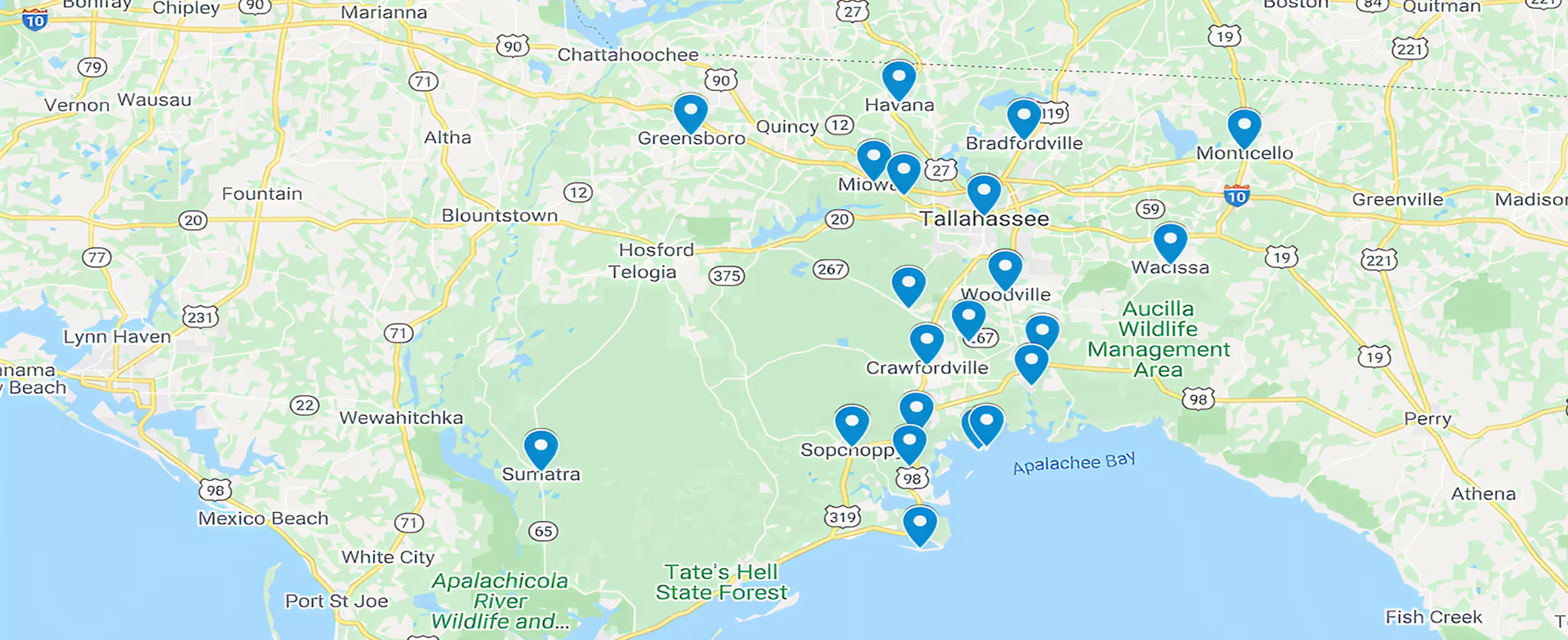
Service Areas