Mini-split Repair in St. Marks, FL
Mini-split repair in St. Marks, FL provides diagnostic, troubleshooting, and repair guidance for ductless systems coastal conditions. The guide covers common faults, on-site testing procedures, parts replacement, warranty handling, and realistic timelines and costs. It outlines emergency indicators, scheduling considerations, and long-term benefits of timely service, including preserved efficiency and improved air quality. Readers gain clear expectations for problem diagnosis, repair steps, and preventive maintenance to extend system life in humid, salt-prone environments. Designed for homeowners and install teams alike.
Mini-split Repair in St. Marks, FL
Keeping a ductless mini-split running efficiently is essential for comfort in St. Marks, FL, where hot, humid summers and salt-laden coastal air put extra stress on HVAC equipment. This page explains diagnostic and repair services for ductless mini-splits, outlines the most common faults seen in St. Marks homes, describes on-site troubleshooting and testing procedures, explains parts replacement and warranty handling, and sets expectations for repair timelines and costs. The goal is practical, decision-stage guidance so you understand the problem, the solution, and what to expect.
Why mini-split repair matters in St. Marks, FL
St. Marks experiences high humidity, frequent heavy rain, and salt spray from the Gulf. Those conditions accelerate corrosion on outdoor units, increase condensate and mold problems inside, and make regular repairs more urgent. During heatwaves or after storms, a failing mini-split can quickly become an emergency for comfort and indoor air quality. Timely, accurate repair avoids larger failures and preserves system efficiency.
Common mini-split issues in St. Marks
- Refrigerant leaks: Corrosion of outdoor coils and brazed joints from salt air, vibration fatigue, or factory defects. Signs include reduced cooling, hissing sounds, or oil residue near lines.
- Compressor failures: Overheating, age, or repeated low-refrigerant operation can damage compressors. Symptoms include loud starts, inability to maintain setpoint, or the system tripping breakers.
- Fan motor and blower problems: Outdoor condenser fan or indoor blower motor wear leads to reduced airflow or strange noises.
- Electrical issues: Failed capacitors, contactors, relays, control boards, or damaged wiring from storms and surges. Intermittent operation, no power to indoor heads, or tripped breakers are common indicators.
- Clogged condensate drains and coil fouling: High humidity promotes buildup, causing water leaks, overflow, or frozen evaporator coils.
- Sensor and control faults: Faulty temperature sensors or communication errors between indoor and outdoor units cause erratic cycling or error codes.
On-site troubleshooting and testing procedures
A thorough diagnostic is the foundation of effective repair. Typical on-site steps include:
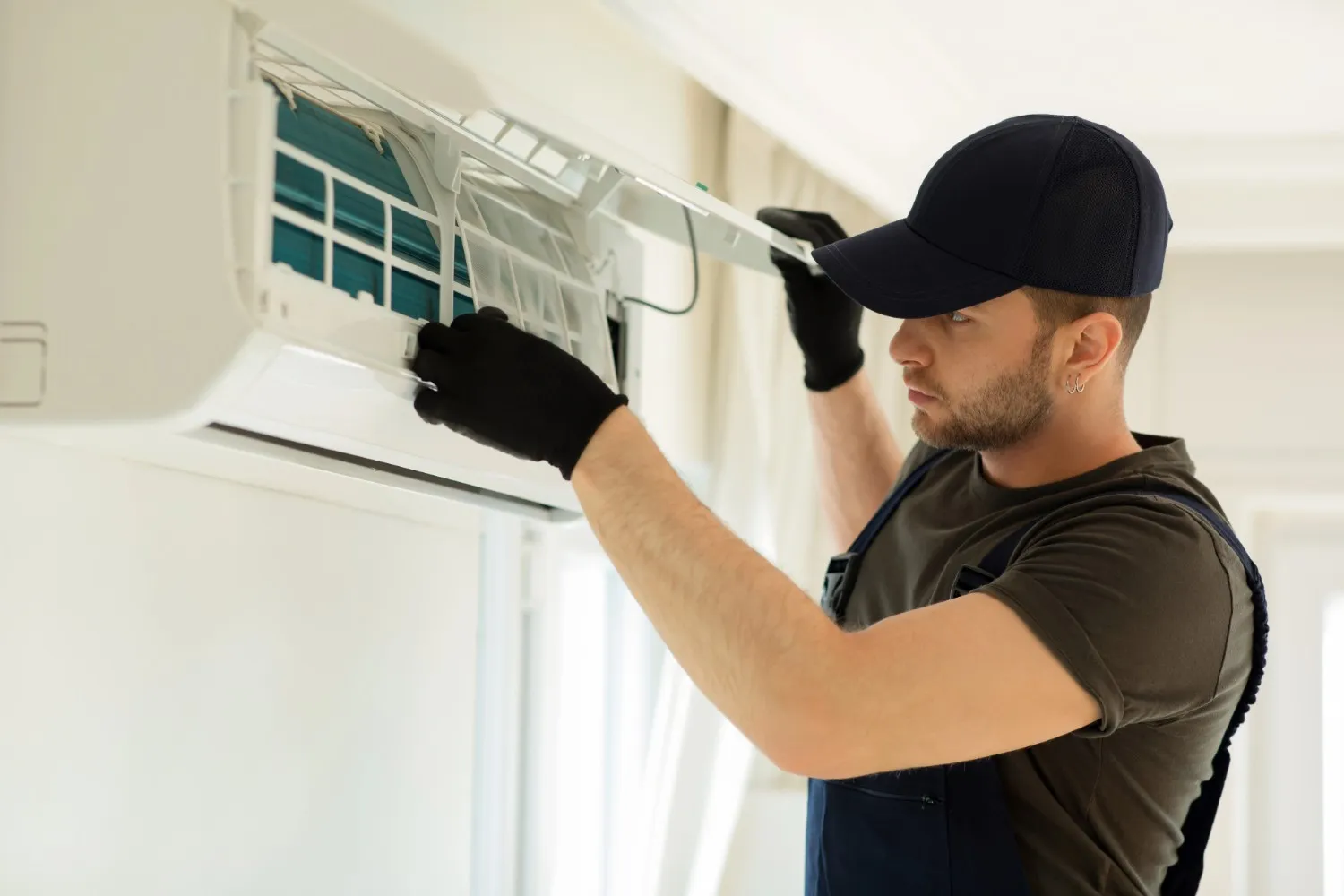
- Visual and physical inspection: Check outdoor coil, line set, wiring, mounting, and indoor heads for corrosion, physical damage, pests, or debris.
- Operational check: Run the system through modes to reproduce faults and record error codes from indoor units and outdoor PCB.
- Electrical testing: Use a multimeter and clamp meter to test voltage, capacitor health, contactor function, compressor amp draw, and continuity of control circuits.
- Refrigerant pressure and leak detection: Measure suction and discharge pressures, compare to expected values for the refrigerant type (R410A, R32, etc.), and use electronic leak detectors and dye when needed.
- Airflow and temperature split: Measure supply and return air temps, check static pressure and blower operation to detect airflow restrictions or ductless head issues.
- Condensate inspection: Test drain flow, inspect drain pans and condensate pumps, and check for biofilm or blockages.
- Component isolation testing: Bypass or isolate parts (capacitors, motors, sensors) to identify failing components without unnecessary replacement.
Typical repairs and parts replacement
Common repairs in St. Marks range from routine maintenance fixes to major component swaps:
- Refrigerant leak repair and recharge: Repair brazed or flare joints, replace failed sections, vacuum the system, and recharge to factory spec. Salt corrosion often requires replacing corroded line segments.
- Compressor replacement: When compressors fail, careful match to OEM specifications is required. This is a major repair and may include changing filter driers, service valves, and testing for underlying causes.
- Fan motor and blower replacement: Indoor blower or outdoor fan motor swaps are common and generally straightforward when compatible parts are available.
- Electrical component replacement: Capacitors, contactors, relays, and control boards are replaced after diagnostic verification. Surge damage after storms can necessitate multiple control component replacements.
- Drain cleaning and coil cleaning: Clearing condensate lines, treating for microbial growth, and cleaning coils restore airflow and prevent water damage.
- Sensor and valve replacement: Thermistors, pressure sensors, expansion valves, and reversing valves are replaced when faulty.
When parts are replaced, using OEM or manufacturer-approved components preserves performance and warranty coverage. Matching refrigerant type and oil specifications is critical for long-term reliability.
Warranty handling and documentation
- Identify warranty type: Distinguish between manufacturer, installer, and extended warranties. Manufacturer warranties typically cover compressors and major components; installer warranties may cover labor.
- Collect documentation: Keep original purchase receipt, installation paperwork, service records, and model/serial numbers. These expedite claims and prove regular maintenance.
- Process steps: Document the diagnosed fault, include photos of failed components, and record serial numbers and diagnostic readings. Warranty claims often require a detailed failure report and proof of preventive maintenance.
- Parts warranty: Many replacement parts have limited warranties; understand start dates and coverage length. If a failed component is under warranty, replacement parts may be provided but processing time varies.
Estimated repair timelines and cost expectations
- Diagnostic visit: Typically 1 to 2 hours on-site for a comprehensive diagnosis.
- Minor repairs: Tasks like drain unclogs, capacitor swaps, thermostat/sensor replacement, or simple electrical fixes can often be completed the same day.
- Moderate repairs: Refrigerant leak repairs, coil cleaning, or blower motor replacement typically require a full workday.
- Major repairs: Compressor or outdoor unit replacement can take 1 to 2 days depending on parts availability and complexity. After-storm or hurricane-related damage may extend timelines due to demand.
- Cost factors: Repair cost depends on the fault severity, part complexity, refrigerant type, labor, and whether structural or corrosion-related damage exists. Systems using older refrigerants may be costlier to service. Coastal corrosion can make repairs less economical over time compared to replacement.
- Parts availability: Lead times for OEM parts affect total repair time. Seasonal demand peaks can also delay scheduling.
Emergency service guidance and scheduling considerations
Recognize when a situation is urgent:
- Smell of burning or smoke, visible sparks, or melting components
- Loud grinding or screeching noises indicating imminent mechanical failure
- Refrigerant hissing or visible oil indicating a major leak
- Repeated tripping of breakers when the unit attempts to run
- Complete loss of cooling during extreme heat, especially for at-risk occupants
- Significant water leaking into living spaces
If you encounter these signs, shut the unit off at the breaker to prevent further damage and isolate the area for safety. For non-emergency scheduling, plan repairs or inspections before St. Marks summer and before hurricane season to reduce risk and avoid peak demand delays. Routine maintenance at least once a year, and more frequently in coastal, high-humidity environments, helps prevent many of the issues listed above.
Long-term benefits of timely mini-split repair
Prompt, proper repair restores comfort, improves energy efficiency, reduces the risk of repeat failures, and maintains indoor air quality. In St. Marks, Proactive upkeep combats salt and humidity-related wear, extends equipment life, and helps avoid costly emergency replacements after storms. Regular diagnostics and repair decisions based on system age, condition, and long-term costs result in better outcomes for both performance and household comfort.
This overview equips St. Marks homeowners with clear expectations about diagnosing, repairing, and maintaining ductless mini-split systems in a coastal, humid climate. Follow regular maintenance intervals and address the warning signs above promptly to keep your mini-split operating reliably.
hear what our satisfied clients have to say
.avif)

I have nothing but great things to say about this company! From the initial call to trouble shoot our old system to the installation of the new system. Maya was awesome and patient with us and the bank. Stratton, Wilton, and Austin did the removal and install of the systems and they were professional and proficient. I will be recommending this company to everyone and anyone! Thank you for making this less stressful then it needed to be. I'm very grateful for the help and comfort they have given me and my family.
We’ve had issues with our a/c unit freezing up off and on for a month or so. Aden from Keith Key came out and checked our system out. He fixed an issue with the bypass valve and also tuned our fan. Additionally we also replaced our thermostats with new T10’s. He took his time and helped me connect all of them to the WiFi and the app.Aden is very friendly and knowledgeable. I haven’t had an issue with my system since. He was also willing to accept the assistance of our overly helpful shih tzu. Call Keith Key and Aden for any issues with hvac systems, they can get it fixed!
Tryston was amazing! So knowledgeable, pleasant and respectful. Keith Key H/A will forever have my family's business
We had a tenant with no heat during the recent 29 degree weather. I called Keith Key Heating and Air before office hours and left my infomation with their answering service. I got a call back from the office promptly at 8:00 a.m. They were able to schedule us for service the same day. The technician arrived at noon, diagnosed the issue and made the repair. The price was quite reasonable. Everyone that we dealt with was friendly, professional and knowledgeable. I would highly recommend them and will be using them again in the future. Thanks Keith Key Heating & Air!!
Heat wasn't working after the sleet storm and being without power for 18 hours. Keith Key sent Trystan the same day as my call. He did a great job (very personable) and got it repaired in no time. Many thanks!
Keith Key HVAC is wonderful! They service our HVAC and just helped me with a super stressful heating issue while I was out of state. They are very organized and professional, and take extra time to explain and follow up. I just love them!
We've called on Keith Key Heating and Air twice for help. Both times, they responded quickly, and were able to make repairs quickly. The techs we've dealt with have been friendly, reliable, professional and knowledgeable. And they don't dig in your pocket like some have been known to do. I honestly don't know what more we could ask for. A solid 10 of 10, and we highly recommend.
Had to replace my AC and Heating unit. Keith Key Heating and Air was very helpful in finding the right unit money wise for me. The young men they sent was courteous and knowledgeable. They made sure everything was up to my standards before they left. If you have trouble I would highly recommend them to you.
Keith Key regularly services both our personal home and one of our rental properties! They are good about communicating to us about the condition of the units at the rental property which is such a relief! We have had to call them for 2 emergencies and both times the techs appeared happy to be there helping us despite being on the weekend! 10/10 recommend.
Service Areas