Mini-split Repair in Sopchoppy, FL
This page outlines common mini-split failures in Sopchoppy, FL, and the diagnostic approach technicians use to identify problems. It covers frequent issues such as no cooling, refrigerant leaks, compressor and fan motor failures, electrical faults, thermostat problems, and condensate-related concerns. It explains typical repairs, from refrigerant recharge to compressor and control-board replacements, plus emergency after-hours options. It discusses expected timelines, itemized cost considerations, warranty terms, safety practices, and maintenance steps to prevent future breakdowns and extend system life.
Mini-split Repair in Sopchoppy, FL
Mini-split systems are a common solution for Sopchoppy homes because they deliver efficient heating and cooling without ductwork. When a mini-split fails, it can quickly make living spaces uncomfortable in our hot, humid Florida climate. This page explains common mini-split failures in Sopchoppy, the diagnostic process technicians use, typical repairs and parts replacement, emergency response options, expected timelines and cost ranges, warranty and safety practices, and maintenance steps that reduce future breakdowns.
Common mini-split issues in Sopchoppy, FL
Sopchoppy’s coastal humidity, salt air, and frequent storms influence which mini-split problems occur most often:
- No cooling or heating: Often caused by low refrigerant, frozen evaporator coils, or compressor failure from extended high-load operation during heat waves.
- Refrigerant leaks: Corrosion of outdoor lines or fittings from salt air can lead to slow or sudden refrigerant loss and reduced capacity.
- Compressor and fan motor failures: Constant use during summer and occasional power surges after storms stress motors and compressors.
- Electrical faults: Tripped breakers, damaged control boards, or loose connections from lightning or aging wiring can interrupt system operation.
- Thermostat/control problems: Remote controllers, wall remotes, or smart controls can fail, lose pairing, or display communication errors.
- Indoor air quality and drainage: Clogged drain lines or algae growth inside condensate pans are common in humid conditions and can cause water leaks or odors.
How technicians diagnose mini-split problems
A methodical diagnostic approach minimizes unnecessary repairs and ensures accurate solutions:
- Initial system inspection: Visual check of indoor and outdoor units, line sets, filters, and condensate lines.
- Electrical testing: Voltage and amp draw checks to confirm safe and correct power delivery and to identify motor or compressor stress.
- Refrigerant assessment: Pressure readings with gauges and leak detection to confirm refrigerant levels and identify leak locations.
- Control and communication checks: Testing remotes, thermostats, and control boards for error codes and signal integrity.
- Operational run test: Observing system while running to check airflow, temperature split, cycling behavior, and unusual noises or vibrations.
- Report and estimate: A clear explanation of findings and recommended repairs, with time and part needs outlined.
Typical repair procedures and parts replacement
Common repairs are focused on restoring efficient, safe operation while using OEM or equivalent parts:
- Refrigerant leak repair and recharge: Locate leak, repair or replace impacted line or fitting, evacuate system, vacuum, and recharge to manufacturer specifications.
- Compressor replacement: When compressors fail, replacement is performed with matched specifications; this may involve recovering refrigerant, swapping electrical components, and system recharging.
- Fan motor replacement: Indoor or outdoor fan motors are swapped and balanced to stop abnormal noises and restore airflow.
- Control board and thermostat replacement: Faulty PCBs or remotes are replaced and reprogrammed to factory settings or integrated with home automation as required.
- Drain line cleaning and coil treatment: Clearing blockages, cleaning coils, and applying antimicrobial measures to prevent mold and improve drainage.
- Electrical repairs: Tightening or replacing terminals, replacing capacitors, contactors, or breakers, and adding surge protection if recurring surges are observed.
Emergency and after-hours response
Because extreme heat or a failing heat mode in winter can be dangerous, many local service providers in the region offer emergency options. Emergency response typically includes:
- After-hours dispatch with priority scheduling subject to availability
- Temporary fixes to restore cooling while parts are sourced
- Safety measures to prevent electrical hazards until permanent repairs are madeExpect emergency services to be handled with higher priority during heat waves or hurricane-related outages.
Estimated repair timelines and cost considerations
Timelines and costs vary by problem severity and parts availability:
- Diagnostic visit: Usually completed in one visit; expect the technician to provide a written estimate afterward.
- Minor repairs and parts (filters, drain cleaning, fan motors): Often completed the same day to within 24 hours.
- Refrigerant recharge and leak repair: May require one to two days depending on leak complexity.
- Major components (compressor, multi-zone control boards): Could take 2 to 5 days due to parts ordering and scheduling.Typical cost ranges (illustrative, local market variations apply):
- Diagnostic fee and basic service: lower range
- Minor repairs and parts replacement: lower to mid range
- Refrigerant work, leak repair, or major components: mid to higher rangeProviding an itemized estimate after diagnosis helps homeowners understand choices between repair and replacement.
Warranty, guarantees, and parts
Most repairs involve manufacturer parts or quality aftermarket components. Typical warranty structures you can expect:
- Manufacturer parts warranty: Varies by brand, often 1 to 5 years for parts on new systems; some compressors have extended warranties.
- Labor warranty: Local service guarantees commonly range from 30 to 365 days on workmanship.
- Ensure refrigerant handling and parts installed match manufacturer specifications to preserve any existing system warranty.
Technician qualifications and safety protocols
Professional mini-split work in Florida should be performed by technicians with proper credentials:
- Florida HVAC licensing and insurance to perform residential HVAC repairs
- EPA 608 certification for refrigerant handling and recovery
- Manufacturer-specific training/certification for brands like Mitsubishi, Daikin, Fujitsu, or others when applicableSafety protocols followed on site:
- Use of personal protective equipment and safe electrical lockout procedures
- Proper refrigerant recovery and leak testing to comply with regulations
- Post-repair system verification and documentation of readings
Maintenance and prevention tips for Sopchoppy homes
Regular preventive care reduces emergency repairs and extends system life:
- Clean or replace filters monthly during high-use seasons
- Schedule professional maintenance at least once a year, ideally before peak summer demand
- Keep outdoor units free of debris and rinse salt buildup periodically if near the coast
- Install surge protection if your area experiences frequent lightning or voltage spikes
- Ensure condensate lines are clear and sloped correctly to prevent water damage
ConclusionPrompt, professional mini-split repair restores comfort, improves efficiency, and prevents more costly failures later. Understanding common issues in Sopchoppy, FL, and the repair process helps homeowners make informed decisions about diagnostics, parts replacement, timelines, warranties, and maintenance for reliable year-round performance.
hear what our satisfied clients have to say
.avif)

I have nothing but great things to say about this company! From the initial call to trouble shoot our old system to the installation of the new system. Maya was awesome and patient with us and the bank. Stratton, Wilton, and Austin did the removal and install of the systems and they were professional and proficient. I will be recommending this company to everyone and anyone! Thank you for making this less stressful then it needed to be. I'm very grateful for the help and comfort they have given me and my family.
We’ve had issues with our a/c unit freezing up off and on for a month or so. Aden from Keith Key came out and checked our system out. He fixed an issue with the bypass valve and also tuned our fan. Additionally we also replaced our thermostats with new T10’s. He took his time and helped me connect all of them to the WiFi and the app.Aden is very friendly and knowledgeable. I haven’t had an issue with my system since. He was also willing to accept the assistance of our overly helpful shih tzu. Call Keith Key and Aden for any issues with hvac systems, they can get it fixed!
Tryston was amazing! So knowledgeable, pleasant and respectful. Keith Key H/A will forever have my family's business
We had a tenant with no heat during the recent 29 degree weather. I called Keith Key Heating and Air before office hours and left my infomation with their answering service. I got a call back from the office promptly at 8:00 a.m. They were able to schedule us for service the same day. The technician arrived at noon, diagnosed the issue and made the repair. The price was quite reasonable. Everyone that we dealt with was friendly, professional and knowledgeable. I would highly recommend them and will be using them again in the future. Thanks Keith Key Heating & Air!!
Heat wasn't working after the sleet storm and being without power for 18 hours. Keith Key sent Trystan the same day as my call. He did a great job (very personable) and got it repaired in no time. Many thanks!
Keith Key HVAC is wonderful! They service our HVAC and just helped me with a super stressful heating issue while I was out of state. They are very organized and professional, and take extra time to explain and follow up. I just love them!
We've called on Keith Key Heating and Air twice for help. Both times, they responded quickly, and were able to make repairs quickly. The techs we've dealt with have been friendly, reliable, professional and knowledgeable. And they don't dig in your pocket like some have been known to do. I honestly don't know what more we could ask for. A solid 10 of 10, and we highly recommend.
Had to replace my AC and Heating unit. Keith Key Heating and Air was very helpful in finding the right unit money wise for me. The young men they sent was courteous and knowledgeable. They made sure everything was up to my standards before they left. If you have trouble I would highly recommend them to you.
Keith Key regularly services both our personal home and one of our rental properties! They are good about communicating to us about the condition of the units at the rental property which is such a relief! We have had to call them for 2 emergencies and both times the techs appeared happy to be there helping us despite being on the weekend! 10/10 recommend.
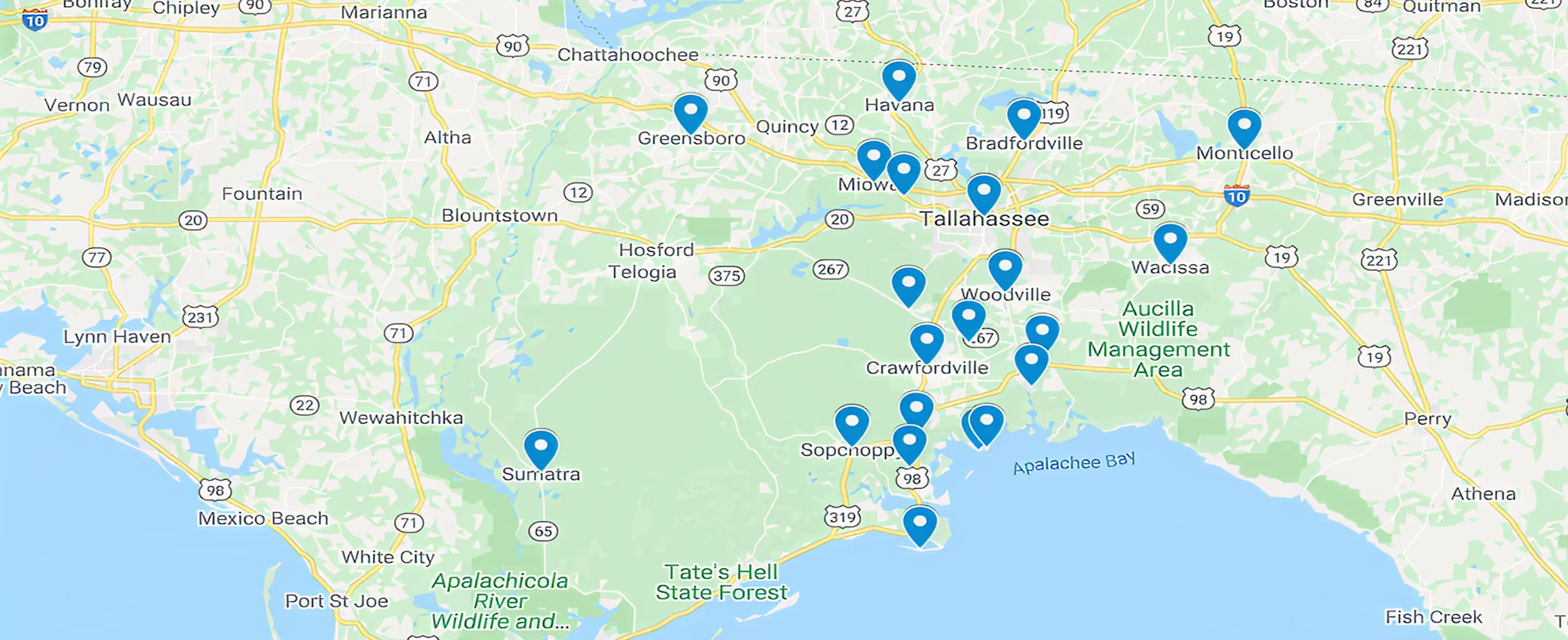
Service Areas