Mini-split Repair in Panacea, FL
Mini-split repair in Panacea, FL delivers expert diagnosis and targeted repairs for coastal conditions, ensuring reliable cooling and energy efficiency. The guide outlines common malfunctions such as refrigerant leaks, restricted airflow, ice on the evaporator, corrosion, and drainage issues, followed by step-by-step diagnostic procedures, including visual checks, filter assessments, electrical tests, refrigerant pressure measurements, leak detection, and airflow verification. It also details repair services—from refrigerant work to coil cleaning, motor replacements, and control board upgrades—and explains the benefits of professional, preventive maintenance.
Mini-split Repair in Panacea, FL
Mini-split systems are a common choice for Panacea, FL homes and vacation properties because they provide efficient, zone-level temperature control without ductwork. Coastal heat, high humidity, frequent storms, and salt air create unique stresses on these systems. When a mini-split underperforms, professional repair focused on the local conditions preserves comfort, energy efficiency, and system life. This page explains common mini-split system malfunctions in Panacea, FL, diagnostic procedures technicians use, repair services typically required, and the benefits of professional repair.
Common mini-split system malfunctions in Panacea, FL
Coastal humidity, salt exposure, and sudden weather changes contribute to these frequent problems:
- Weak or no cooling
Often caused by refrigerant leaks, clogged filters, or failing compressors. In Panacea, heavy use during hot months can accelerate wear. - Poor airflow from the indoor unit
Clogged filters, blocked coils, or failing fan motors reduce airflow and comfort. - Ice on the evaporator coil
Restricted airflow or low refrigerant can cause the coil to freeze, then drip as it thaws, increasing humidity indoors. - Refrigerant leaks
Corrosion from salt air and vibration on older lines often lead to slow leaks that reduce cooling capacity. - Strange noises
Rattles, humming, or grinding can indicate loose panels, failing fan bearings, or compressor issues. - Drainage and condensate issues
High humidity and organic material cause condensate drains to clog, producing leaks, water damage, or mold growth. - Electrical failures and control errors
Frequent power surges during storms or degraded control boards can cause intermittent operation or communication errors. - Outdoor unit corrosion and physical damage
Salt spray, coastal winds, and storm debris can corrode fins, fan blades, and fasteners or cause impact damage.
Diagnostic procedures for accurate repairs
Proper diagnosis prevents unnecessary part replacement and ensures repairs address root causes. Typical diagnostic steps include:
- Visual inspection
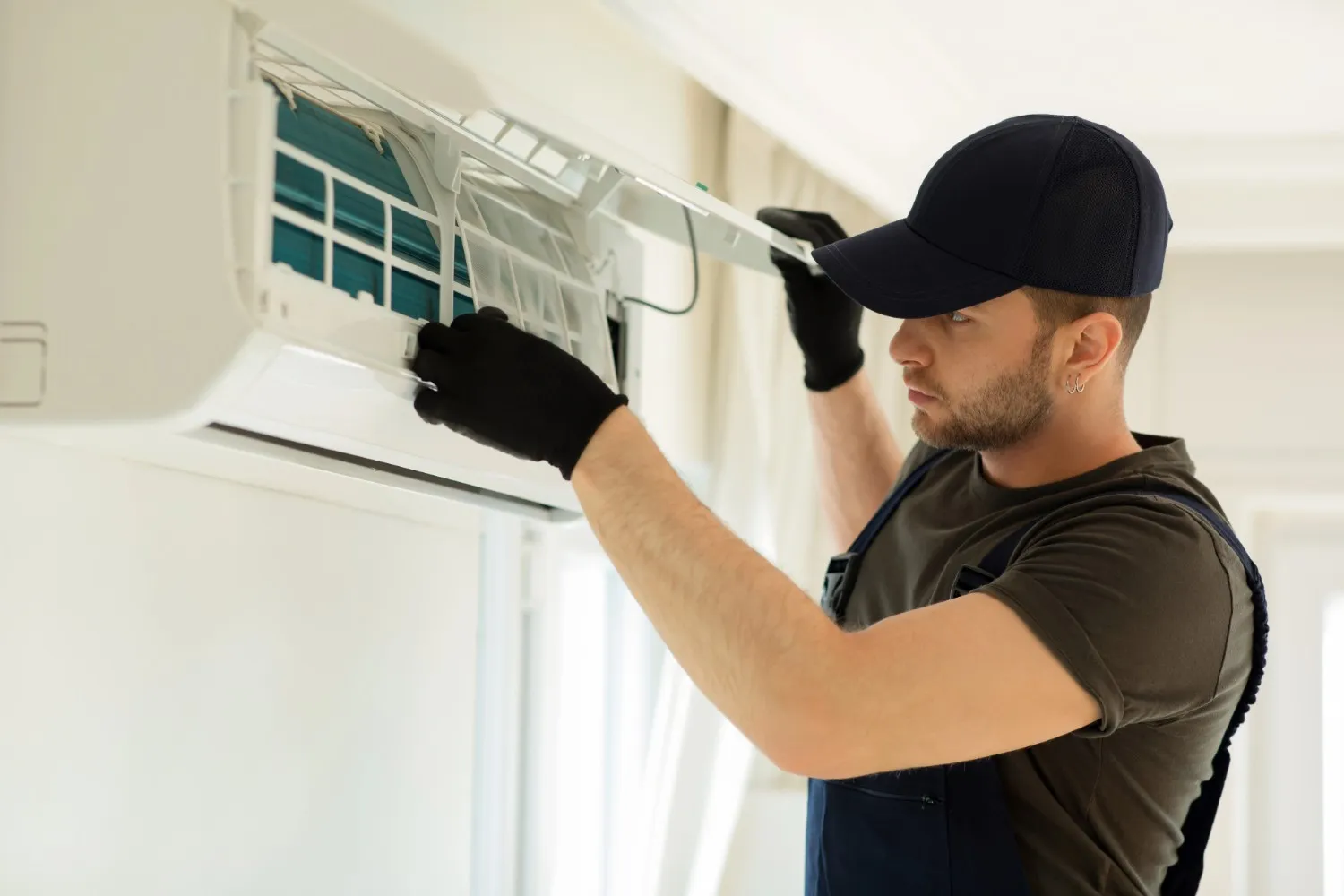
Check indoor and outdoor units for corrosion, physical damage, loose connections, and blocked airflow paths. - Filter and coil assessment
Inspect and measure filter condition and coil cleanliness. Dirty coils reduce efficiency and mimic refrigerant loss. - Electrical checks
Test capacitors, contactors, fuses, and wiring for proper voltages and continuity. Faulty electrical components are common after storms. - Refrigerant pressure testing
Measure system pressures and temperatures to determine if refrigerant levels match manufacturer specifications. - Leak detection
Use electronic detectors or UV dye to locate refrigerant leaks, especially at joints, flare fittings, and evaporator coil ends. - Airflow measurement
Verify airflow through the indoor unit; inadequate airflow points to fans, filters, or ducted attachments. - Drain inspection
Clear and test condensate drains and traps for restrictions and proper slope to prevent backups. - Control and communication tests
Verify remote, thermostat, and PCB functions, and check for error codes saved in the system controller.
Documenting each step ensures repairs are targeted and durable in Panacea conditions.
Repair services commonly provided
Repairs focus on restoring reliable operation, efficiency, and protecting the system from coastal stressors:
- Refrigerant leak repair and recharge
Locate and repair leaks with proper brazing or seal replacement, evacuate and recharge to manufacturer charge. Work complies with refrigerant handling standards. - Coil cleaning and fin straightening
Remove salt, pollen, and biological buildup to restore heat transfer and efficiency. Straighten bent fins to improve airflow. - Fan motor and blower repairs
Replace failing indoor or outdoor fan motors and bearings to restore airflow and reduce noise. - Compressor and inverter module assessment
Evaluate compressor health and inverter electronics. Repair or replace components based on failure mode and cost-effectiveness. - Control board and sensor replacement
Replace damaged PCBs, communication boards, or room sensors to clear error codes and restore reliable control. - Condensate drain clearing and trap repair
Clear clogs, install or replace traps, and apply treatments to reduce biological growth in humid Panacea environments. - Electrical repairs and surge protection
Repair wiring, replace capacitors and contactors, and recommend or install surge mitigation to protect electronics from storm-related spikes. - Corrosion mitigation and protective measures
Treat corroded parts, replace severely corroded components, and apply protective coatings or sacrificial anodes to extend outdoor unit life. - Storm and impact damage repairs
Repair bent panels, replace broken fan blades, and restore mounting integrity after high winds or debris impact.
Benefits of professional mini-split repair in Panacea, FL
Choosing a qualified technician who understands local conditions provides measurable benefits:
- Accurate diagnosis prevents repeated callbacks
Professionals use structured diagnostics to fix the root cause rather than treating symptoms. - Safe handling of refrigerants and electricity
Proper tools and certifications ensure safe repair and compliance with regulations. - Restored efficiency and lower energy bills
Clean coils, correct refrigerant charge, and functional controls return systems to efficient operation. - Extended equipment life
Addressing corrosion and electrical stress early prevents premature component failure. - Reduced risk of water damage and mold
Clearing drains and fixing condensate leaks protects your home from moisture damage in Panacea humidity. - Better performance during peak demand and storms
Reliable mini-splits deliver consistent comfort even during hot, humid spells common in coastal Florida.
What to expect during a repair visit and maintenance tips
Typical repair visits include a multi-point diagnostic, transparent explanation of findings, and recommended repairs. Many straightforward repairs are completed in one visit, while parts-only or complex compressor work may require additional scheduling.
Preventive maintenance to reduce future repairs:
- Clean or replace indoor filters monthly during heavy use.
- Schedule annual tune-ups that include coil cleaning, refrigerant checks, and electrical testing.
- Keep the outdoor unit clear of vegetation, sand, and debris; rinse salt buildup periodically with fresh water.
- Elevate outdoor units where possible to reduce splash and flood risk.
- Install surge protection for homes prone to lightning or storm-related voltage spikes.
- Ensure condensate drains are clear and sloped correctly.
Timely attention to mini-split symptoms avoids larger failures and maintains comfortable indoor conditions year-round. In Panacea, FL, addressing salt, humidity, and storm-related factors is key to keeping mini-splits reliable and efficient.
hear what our satisfied clients have to say
.avif)

I have nothing but great things to say about this company! From the initial call to trouble shoot our old system to the installation of the new system. Maya was awesome and patient with us and the bank. Stratton, Wilton, and Austin did the removal and install of the systems and they were professional and proficient. I will be recommending this company to everyone and anyone! Thank you for making this less stressful then it needed to be. I'm very grateful for the help and comfort they have given me and my family.
We’ve had issues with our a/c unit freezing up off and on for a month or so. Aden from Keith Key came out and checked our system out. He fixed an issue with the bypass valve and also tuned our fan. Additionally we also replaced our thermostats with new T10’s. He took his time and helped me connect all of them to the WiFi and the app.Aden is very friendly and knowledgeable. I haven’t had an issue with my system since. He was also willing to accept the assistance of our overly helpful shih tzu. Call Keith Key and Aden for any issues with hvac systems, they can get it fixed!
Tryston was amazing! So knowledgeable, pleasant and respectful. Keith Key H/A will forever have my family's business
We had a tenant with no heat during the recent 29 degree weather. I called Keith Key Heating and Air before office hours and left my infomation with their answering service. I got a call back from the office promptly at 8:00 a.m. They were able to schedule us for service the same day. The technician arrived at noon, diagnosed the issue and made the repair. The price was quite reasonable. Everyone that we dealt with was friendly, professional and knowledgeable. I would highly recommend them and will be using them again in the future. Thanks Keith Key Heating & Air!!
Heat wasn't working after the sleet storm and being without power for 18 hours. Keith Key sent Trystan the same day as my call. He did a great job (very personable) and got it repaired in no time. Many thanks!
Keith Key HVAC is wonderful! They service our HVAC and just helped me with a super stressful heating issue while I was out of state. They are very organized and professional, and take extra time to explain and follow up. I just love them!
We've called on Keith Key Heating and Air twice for help. Both times, they responded quickly, and were able to make repairs quickly. The techs we've dealt with have been friendly, reliable, professional and knowledgeable. And they don't dig in your pocket like some have been known to do. I honestly don't know what more we could ask for. A solid 10 of 10, and we highly recommend.
Had to replace my AC and Heating unit. Keith Key Heating and Air was very helpful in finding the right unit money wise for me. The young men they sent was courteous and knowledgeable. They made sure everything was up to my standards before they left. If you have trouble I would highly recommend them to you.
Keith Key regularly services both our personal home and one of our rental properties! They are good about communicating to us about the condition of the units at the rental property which is such a relief! We have had to call them for 2 emergencies and both times the techs appeared happy to be there helping us despite being on the weekend! 10/10 recommend.
Service Areas