Mini-split Repair in Monticello, FL
Mini-split repair in Monticello, FL provides a comprehensive overview of diagnosing and fixing ductless systems to restore comfort and humidity control during hot, humid summers. The guide outlines common issues such as refrigerant leaks, compressor or fan motor failures, electrical faults, and drainage problems, and explains a structured diagnostic process, from initial inspection to run tests and reporting options. It also covers typical repairs, expected timelines, cost factors, warranty considerations, emergency scheduling, and maintenance habits to prevent future failures.
Mini-split Repair in Monticello, FL
Mini-split Repair in Monticello, FL is focused on restoring reliable cooling and dehumidification for homes that face hot, humid summers and frequent afternoon storms. Ductless systems are efficient and flexible, but when they develop problems they can leave a house uncomfortable fast. This page explains common mini-split issues in Monticello homes, how technicians diagnose problems, typical repairs, expected timelines and cost drivers, warranty considerations, and practical instructions for scheduling emergency or routine service.
Why timely mini-split repair matters in Monticello, FL
Monticello’s humid subtropical climate puts continuous stress on cooling equipment. High humidity increases runtime and can accelerate wear on compressors, fan motors, and condensate systems. Seasonal thunderstorms and occasional power surges can create electrical faults. Prompt repair prevents secondary damage like mold from condensate overflow and protects indoor comfort and indoor air quality.
Common mini-split problems in Monticello, FL
- Unit not cooling or weak airflow: Often caused by dirty filters, blocked indoor blower, stuck expansion valve, low refrigerant, or compressor issues.
- Refrigerant leaks: Symptoms include frosting on lines, reduced cooling capacity, and higher energy bills. Warm, humid conditions can accelerate corrosion at fittings.
- Compressor or fan motor failure: Motors can burn out from excessive run time or electrical issues after storms.
- Electrical and control faults: Faulty capacitors, relays, or control board failures can produce intermittent operation, error codes, or no power to the head unit.
- Condensate and drain problems: Clogged drains or failed condensate pumps cause water leaks and potential mold in wall cavities.
- Odd noises or vibrations: Loose mounts, damaged fans, or failing compressors cause rattles, buzzing, or knocking.
- Sensor and thermostat errors: Miscalibrated room sensors or communication errors between indoor and outdoor units lead to short-cycling or inaccurate temperature control.
How we diagnose a ductless system problem
A clear diagnostic process reduces unnecessary parts replacement and speeds repair:
- Initial inspection: Visual check of indoor and outdoor units, filters, drain lines, and thermostat settings. Look for signs of water intrusion or rodent damage common in rural areas.
- Electrical testing: Multimeter checks for correct voltage, capacitor condition, and control signals. Power surges from storms are a frequent cause of electronic failures in Monticello.
- Refrigerant assessment: Manifold gauge set and electronic leak detectors identify pressure anomalies and locate leaks. Refrigerant type (R410A, R32) is verified.
- Airflow and temperature testing: Measure supply/return air temps and static pressure to determine blower and ductless head performance.
- Functional run test: Run the system under load to reproduce symptoms and identify intermittent faults.
- Report and options: Technician explains findings, likely causes, recommended repairs, and estimated timeline based on parts availability.
Typical repairs and what they involve
- Compressor replacement or repair: Replacing a compressor is a major repair that requires evacuating and recharging refrigerant, confirming correct oil type, and electrical work. Timeline depends on part availability.
- Fan motor and blower repairs: Usually involves replacing bearings, capacitors, or the motor assembly. Most fan motor repairs are completed in one visit if parts are stocked.
- Refrigerant leak detection and repair: Locate leak with electronic detector or dye, repair the leak (soldered joint, replaced line set, or component swap), pressure-test, evacuate, and recharge to factory spec. Complete repairs include leak verification.
- Electrical and control fixes: Replace capacitors, contactors, control boards, or communication harnesses. Techs also update settings and test surge protection if needed.
- Condensate and drain solutions: Clear clogs, replace condensate pumps, install trap/float switches, and test drain routing to prevent future overflow and mold.
- Sensor and thermostat replacement: Swap or recalibrate room sensors or remote thermostats; verify system communication across multiple heads.
Technician qualifications and tools used
Qualified technicians for mini-split repair should have:
- EPA 608 certification for refrigerant handling.
- Manufacturer-specific training for popular brands and inverter-driven systems.
- Electrical and HVAC trade certifications; familiarity with local code and safety.
- Experience with ductless multi-zone systems and line set brazing.
Common tools and test equipment:
- Digital manifold gauges and refrigerant scales
- Electronic leak detectors and UV dye kits
- Vacuum pumps and recovery machines
- Multimeters, clamp meters, and infrared thermometers
- Bore scopes for concealed drain inspections and borescopes for cavity checks
- Wet/dry vacs and condensate pump testers
- Hand tools, brazing torches, and recovery cylinders
Repair timelines and cost factors
Estimated timelines:
- Minor electrical or condensate repairs: 1 to 3 hours
- Refrigerant top-off and minor leak fixes: 2 to 6 hours
- Fan motor or control board replacement: 2 to 6 hours (depending on unit access)
- Compressor replacement or major component swaps: 4 to 12+ hours, possibly longer if parts must be ordered
Cost factors that affect repair price:
- Age and model of the mini-split (legacy refrigerants or obsolete parts raise costs)
- Accessibility (wall cavities, attic or high-mounted indoor heads add labor)
- Type of refrigerant and current market pricing
- Need for major components such as compressor or outdoor coil
- Whether multiple zones are affected or only a single head
- Warranty coverage and availability of OEM parts
- Local parts availability in the Monticello area; rural locations can add lead time
Warranty and parts information
Most manufacturer warranties cover major components for a limited time, but coverage varies by brand and registration status. Labor warranties are typically provided by the service provider and differ from parts warranties. Keep the unit model and serial numbers, service records, and original purchase documentation to make warranty claims easier. For out-of-warranty systems, technicians can advise on OEM parts versus aftermarket options and the tradeoffs in longevity and cost.
Scheduling emergency or routine repair service: what to prepare
When arranging emergency or routine service, preparing the following helps technicians diagnose and solve the problem faster:
- Unit model and serial numbers (usually on the outdoor unit)
- Description of symptoms, error codes displayed, and when the problem began
- Recent events that may have caused the issue (storms, power outages)
- Accessibility details: attic access, locked gates, or pets left outside
- Preferred times for a visit and whether occupants will be present
- For emergencies (no cooling during extreme heat, active water leak, burning electrical smell): switch off the unit at the breaker if safe to do so and isolate water leakage if possible
Maintenance tips to reduce repairs
- Schedule seasonal tune-ups before summer peak and after hurricane season.
- Clean or replace filters monthly during heavy use.
- Keep outdoor unit clear of vegetation and debris to maintain airflow.
- Inspect condensate lines for blockages and clean drain pans annually.
- Use a surge protector for outdoor units if your area sees frequent storms.
Repairing a mini-split promptly in Monticello, FL keeps your home comfortable, limits humidity-related damage, and maximizes system life. Understanding typical issues, the diagnostic process, and repair options helps homeowners make informed decisions when service is needed.
hear what our satisfied clients have to say
.avif)

I have nothing but great things to say about this company! From the initial call to trouble shoot our old system to the installation of the new system. Maya was awesome and patient with us and the bank. Stratton, Wilton, and Austin did the removal and install of the systems and they were professional and proficient. I will be recommending this company to everyone and anyone! Thank you for making this less stressful then it needed to be. I'm very grateful for the help and comfort they have given me and my family.
We’ve had issues with our a/c unit freezing up off and on for a month or so. Aden from Keith Key came out and checked our system out. He fixed an issue with the bypass valve and also tuned our fan. Additionally we also replaced our thermostats with new T10’s. He took his time and helped me connect all of them to the WiFi and the app.Aden is very friendly and knowledgeable. I haven’t had an issue with my system since. He was also willing to accept the assistance of our overly helpful shih tzu. Call Keith Key and Aden for any issues with hvac systems, they can get it fixed!
Tryston was amazing! So knowledgeable, pleasant and respectful. Keith Key H/A will forever have my family's business
We had a tenant with no heat during the recent 29 degree weather. I called Keith Key Heating and Air before office hours and left my infomation with their answering service. I got a call back from the office promptly at 8:00 a.m. They were able to schedule us for service the same day. The technician arrived at noon, diagnosed the issue and made the repair. The price was quite reasonable. Everyone that we dealt with was friendly, professional and knowledgeable. I would highly recommend them and will be using them again in the future. Thanks Keith Key Heating & Air!!
Heat wasn't working after the sleet storm and being without power for 18 hours. Keith Key sent Trystan the same day as my call. He did a great job (very personable) and got it repaired in no time. Many thanks!
Keith Key HVAC is wonderful! They service our HVAC and just helped me with a super stressful heating issue while I was out of state. They are very organized and professional, and take extra time to explain and follow up. I just love them!
We've called on Keith Key Heating and Air twice for help. Both times, they responded quickly, and were able to make repairs quickly. The techs we've dealt with have been friendly, reliable, professional and knowledgeable. And they don't dig in your pocket like some have been known to do. I honestly don't know what more we could ask for. A solid 10 of 10, and we highly recommend.
Had to replace my AC and Heating unit. Keith Key Heating and Air was very helpful in finding the right unit money wise for me. The young men they sent was courteous and knowledgeable. They made sure everything was up to my standards before they left. If you have trouble I would highly recommend them to you.
Keith Key regularly services both our personal home and one of our rental properties! They are good about communicating to us about the condition of the units at the rental property which is such a relief! We have had to call them for 2 emergencies and both times the techs appeared happy to be there helping us despite being on the weekend! 10/10 recommend.
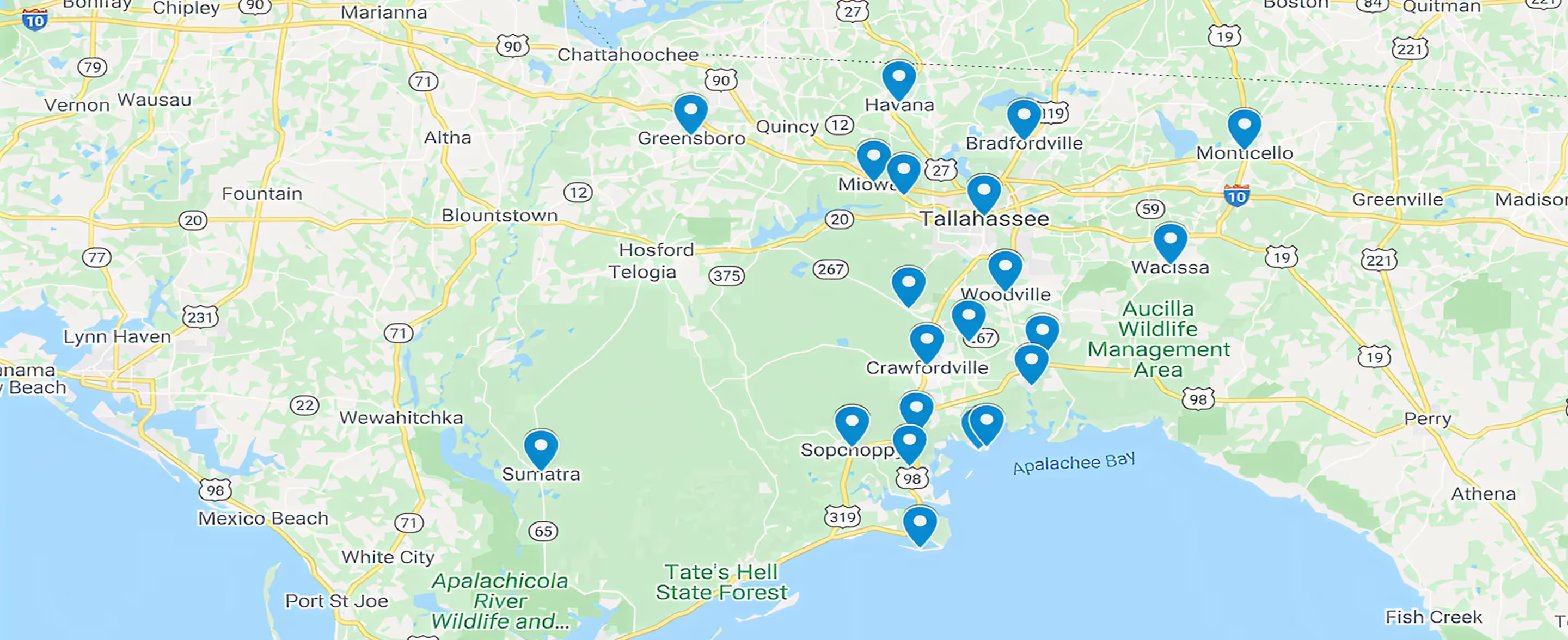
Service Areas