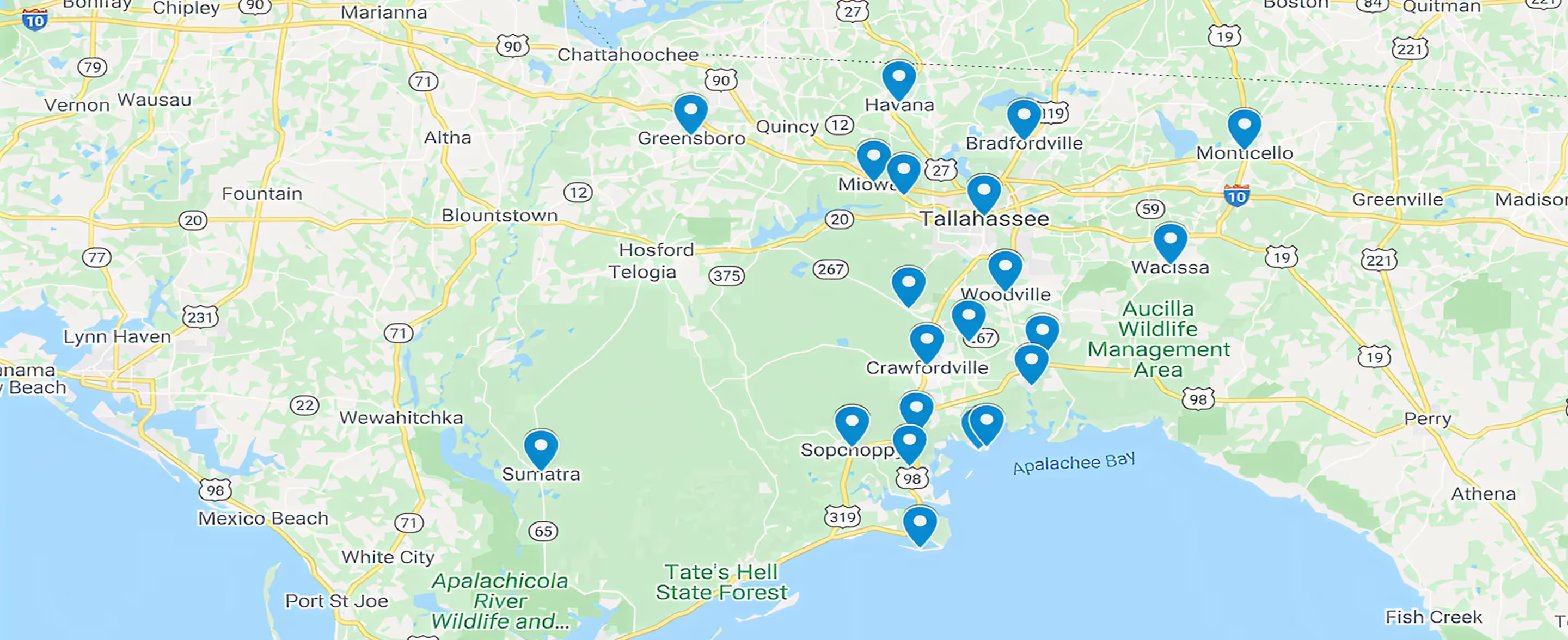
IAQ Installation in Havana, FL

Professional IAQ installation in Havana, FL, ensures homes stay comfortable and healthy during hot, humid summers and pollen-heavy seasons. Services address common indoor air quality concerns and include whole-house air purifiers, ventilation systems, humidifiers, and dehumidifiers, with guidance on selecting and sizing equipment. Installations integrate with existing ducts, controls, and sensors, include quality checks, and offer ongoing maintenance to maximize health, energy efficiency, and system performance year-round.
IAQ Installation in Havana, FL
Indoor air quality installation in Havana, FL matters because the local climate and building types create specific air challenges. Hot, humid summers, seasonal pollen, and rural dust can combine to increase allergens, mold risk, and strain on HVAC systems. This page explains how professional IAQ installation—air purifiers, humidifiers, dehumidifiers, and ventilation systems—is selected, sized, integrated, and commissioned so your Havana home achieves measurable, lasting improvements in comfort and health.
Why IAQ installation is essential for Havana, FL homes
- High summer humidity promotes mold and dust-mite growth, which aggravates allergies and asthma.
- Pine and grass pollen and occasional agricultural dust increase particulate load during spring and harvest seasons.
- Older ducts or leaky construction common in the region can pull in outdoor particles and moisture, undermining system performance.
- Proper IAQ reduces HVAC runtime and can prevent recurring mold and odor problems by controlling moisture before it damages building materials.
Common IAQ issues in Havana, FL
- Persistent indoor humidity above 60% causing musty smells and visible mold
- Allergy symptoms triggered by pollen, pet dander, or dust
- Poor ventilation, stale air, or elevated CO2 in well-sealed homes
- HVAC coils and drip pans developing biological growth due to inadequate filtration or UV protection
- Condensation in crawlspaces or basements increasing structural moisture
Types of IAQ systems and when to choose them
- Whole-house air purifiers
- HEPA/media filters: best for fine particles like pollen and smoke; installed in the return plenum or as a media cabinet.
- UV Coil purifiers: reduce mold and bacteria on evaporator coils and drain pans, improving coil efficiency.
- Electronic air cleaners: remove particles but require maintenance for performance.
- Ventilation systems
- ERV/HRV units: provide balanced fresh air with energy recovery. Selection depends on humidity profiles—some ERVs may need paired dehumidification in very humid summers.
- Dedicated outdoor air systems (DOAS): supply conditioned, dehumidified fresh air without overloading the main system—recommended for hot, humid climates.
- Humidifiers
- Typically used only seasonally in North Florida when heating causes indoor dryness; choose evaporative or steam models based on distribution needs.
- Whole-house dehumidifiers
- Often the highest-impact IAQ upgrade in Havana: control relative humidity year-round, reduce mold risk, and allow the air conditioner to run more efficiently.
How we select and size IAQ equipment
Selection is driven by measurable home and indoor conditions, not one-size-fits-all recommendations:
- Initial assessment
- Measure home square footage, ceiling heights, occupancy, and daily activities.
- Test indoor relative humidity, temperature trends, basic particulate counts, and inspect ducts and crawlspaces for moisture or mold.
- Sizing criteria
- Filtration: choose MERV rating or HEPA capacity based on target particle removal and static-pressure tolerance of existing HVAC equipment.
- Dehumidifiers: sized by pint-per-day removal capacity, accounting for home envelope tightness and typical summer humidity in Havana.
- Ventilation: calculate required outdoor air CFM based on occupants and square footage and match to ERV/DOAS capacity.
- Compatibility check
- Confirm the home’s HVAC blower can handle additional filter pressure drop, or select a bypass/media cabinet.
- Evaluate electrical service and space for installation of dehumidifiers, UV units, or ERVs.
Integration with existing HVAC and ductwork
Proper integration avoids common mistakes that reduce performance:
- Filter and airflow compatibility
- Installing high-MERV filters without accounting for blower capacity can reduce airflow and cooling efficiency. We specify solutions that maintain proper CFM.
- Duct modifications and sealing
- IAQ upgrades perform best with well-sealed, insulated ducts. Leaky ducts can reintroduce pollutants and moisture.
- Drainage and condensate management
- Whole-house dehumidifiers and coil UVs require correct condensate routing and traps to prevent backups and mold growth.
- Controls and sensors
- Humidity sensors, differential pressure sensors, and smart controls ensure systems operate only when needed and maintain target humidity (typically 40–50% indoor RH in humid climates).
- Placement best practices
- Central return placements for whole-house filters or purifiers maximize airflow through the unit. Dehumidifiers often connect to return plenum or use dedicated ducts for optimal distribution.
Installation process and quality checks
- Pre-installation: document site conditions, run humidity/particulate baseline tests, and finalize equipment based on sizing calculations.
- Installation steps:
- Prepare mounting location and modify ducts or electrical as required.
- Install equipment (media cabinets, UV lights, dehumidifier, ERV) per manufacturer and code requirements.
- Connect condensate lines and install traps/pumps where needed.
- Configure controls and calibrate sensors.
- Commissioning and testing:
- Verify airflow and static pressure to ensure the HVAC system still meets intended CFM.
- Confirm dehumidifier output meets humidity reduction targets under typical summertime conditions.
- Check ERV balancing and verify no undue moisture transfer problems.
- Run an indoor air baseline test post-installation to quantify particulate and humidity changes.
Expected benefits and what to expect after installation
- Health and comfort improvements: reduced allergens, less mustiness, and better sleep quality.
- Energy and system longevity: controlling humidity can reduce AC runtime and prevent corrosion or biofouling on coils.
- Structural protection: lower moisture reduces mold growth and slows material degradation.
- Short transitional period: you may notice initial odors from disturbed dust or mechanical drying; these usually clear within days as the system stabilizes.
Maintenance and long-term performance
- Regular tasks to sustain performance:
- Replace or clean filters per the manufacturer (often 3–12 months depending on MERV/HEPA and local pollen/dust levels).
- Replace UV lamps annually and clean lamp housings.
- Inspect and clean condensate lines and pans during HVAC tune-ups.
- Recalibrate humidity and ventilation sensors every 1–2 years.
- Annual IAQ performance checks including humidity readings and airflow verification.
- Seasonal advice for Havana homes
- Prioritize dehumidifier checks before summer peaks.
- During pollen season, monitor and potentially increase filter maintenance frequency.
Carefully planned IAQ installation in Havana, FL targets the specific climate and building conditions that drive moisture and particulate problems in this region. A professional assessment that combines measured baseline testing, correct sizing, proper HVAC integration, and ongoing maintenance delivers dependable, measurable indoor air improvements that protect health, comfort, and your home’s durability.
hear what our satisfied clients have to say
.avif)

I have nothing but great things to say about this company! From the initial call to trouble shoot our old system to the installation of the new system. Maya was awesome and patient with us and the bank. Stratton, Wilton, and Austin did the removal and install of the systems and they were professional and proficient. I will be recommending this company to everyone and anyone! Thank you for making this less stressful then it needed to be. I'm very grateful for the help and comfort they have given me and my family.
We’ve had issues with our a/c unit freezing up off and on for a month or so. Aden from Keith Key came out and checked our system out. He fixed an issue with the bypass valve and also tuned our fan. Additionally we also replaced our thermostats with new T10’s. He took his time and helped me connect all of them to the WiFi and the app.Aden is very friendly and knowledgeable. I haven’t had an issue with my system since. He was also willing to accept the assistance of our overly helpful shih tzu. Call Keith Key and Aden for any issues with hvac systems, they can get it fixed!
Tryston was amazing! So knowledgeable, pleasant and respectful. Keith Key H/A will forever have my family's business
We had a tenant with no heat during the recent 29 degree weather. I called Keith Key Heating and Air before office hours and left my infomation with their answering service. I got a call back from the office promptly at 8:00 a.m. They were able to schedule us for service the same day. The technician arrived at noon, diagnosed the issue and made the repair. The price was quite reasonable. Everyone that we dealt with was friendly, professional and knowledgeable. I would highly recommend them and will be using them again in the future. Thanks Keith Key Heating & Air!!
Heat wasn't working after the sleet storm and being without power for 18 hours. Keith Key sent Trystan the same day as my call. He did a great job (very personable) and got it repaired in no time. Many thanks!
Keith Key HVAC is wonderful! They service our HVAC and just helped me with a super stressful heating issue while I was out of state. They are very organized and professional, and take extra time to explain and follow up. I just love them!
We've called on Keith Key Heating and Air twice for help. Both times, they responded quickly, and were able to make repairs quickly. The techs we've dealt with have been friendly, reliable, professional and knowledgeable. And they don't dig in your pocket like some have been known to do. I honestly don't know what more we could ask for. A solid 10 of 10, and we highly recommend.
Had to replace my AC and Heating unit. Keith Key Heating and Air was very helpful in finding the right unit money wise for me. The young men they sent was courteous and knowledgeable. They made sure everything was up to my standards before they left. If you have trouble I would highly recommend them to you.
Keith Key regularly services both our personal home and one of our rental properties! They are good about communicating to us about the condition of the units at the rental property which is such a relief! We have had to call them for 2 emergencies and both times the techs appeared happy to be there helping us despite being on the weekend! 10/10 recommend.
Service Areas