IAQ Repair in Ochlocknee, FL
This page explains how professional IAQ repair in Ochlocknee, FL diagnoses and fixes air purification and ventilation systems to improve comfort and reduce allergens. It covers common failure modes for whole-house filtration, purifiers, UV/coil purifiers, humidifiers, dehumidifiers, and ERV/HRV, plus on-site inspection, testing, and repair planning. Typical solutions include filter/media replacements, motor and fan repairs, UV lamp updates, sensor recalibration, duct sealing, and core work for ERV/HRV. Preventive maintenance saves energy and protects indoor health. Timely service reduces emergencies and extends equipment life.
IAQ Repair in Ochlocknee, FL
Indoor air quality problems are common in humid, warm climates like Ochlocknee, FL. Poor IAQ can cause allergies, persistent odors, higher energy costs, and faster wear on HVAC and ventilation equipment. This page explains how professional IAQ repair in Ochlocknee, FL diagnoses and fixes air purifiers, UV/coil purifiers, humidifiers, dehumidifiers, ERV/HRV systems, and whole-house filtration so your home breathes cleaner and systems perform reliably.
Why IAQ repair matters in Ochlocknee, FL
Ochlocknee’s humid subtropical conditions and seasonal pollen spikes increase the risk of mold growth, high indoor humidity, and airborne allergens. Occasional heavy rains and storm-driven moisture intrusion further stress ventilation and dehumidification systems. Timely IAQ repair prevents recurring odors, reduces allergy triggers, restores ventilation balance, and protects finished surfaces and ductwork from microbial growth.
Common IAQ systems and failure modes
- Whole-house filtration (MERV/HEPA): clogged filters, bypass leaks, reduced airflow, electronic filter failures.
- Portable and installed air purifiers: fan motor failure, sensor drift, worn ionizing components, clogged prefilters.
- UV/coil purifiers: burned-out lamps, lamp alignment problems, crusted coil deposits reducing UV effectiveness.
- Humidifiers (steam and evaporative): scale buildup, water feed valve failure, sensor/calibration drift.
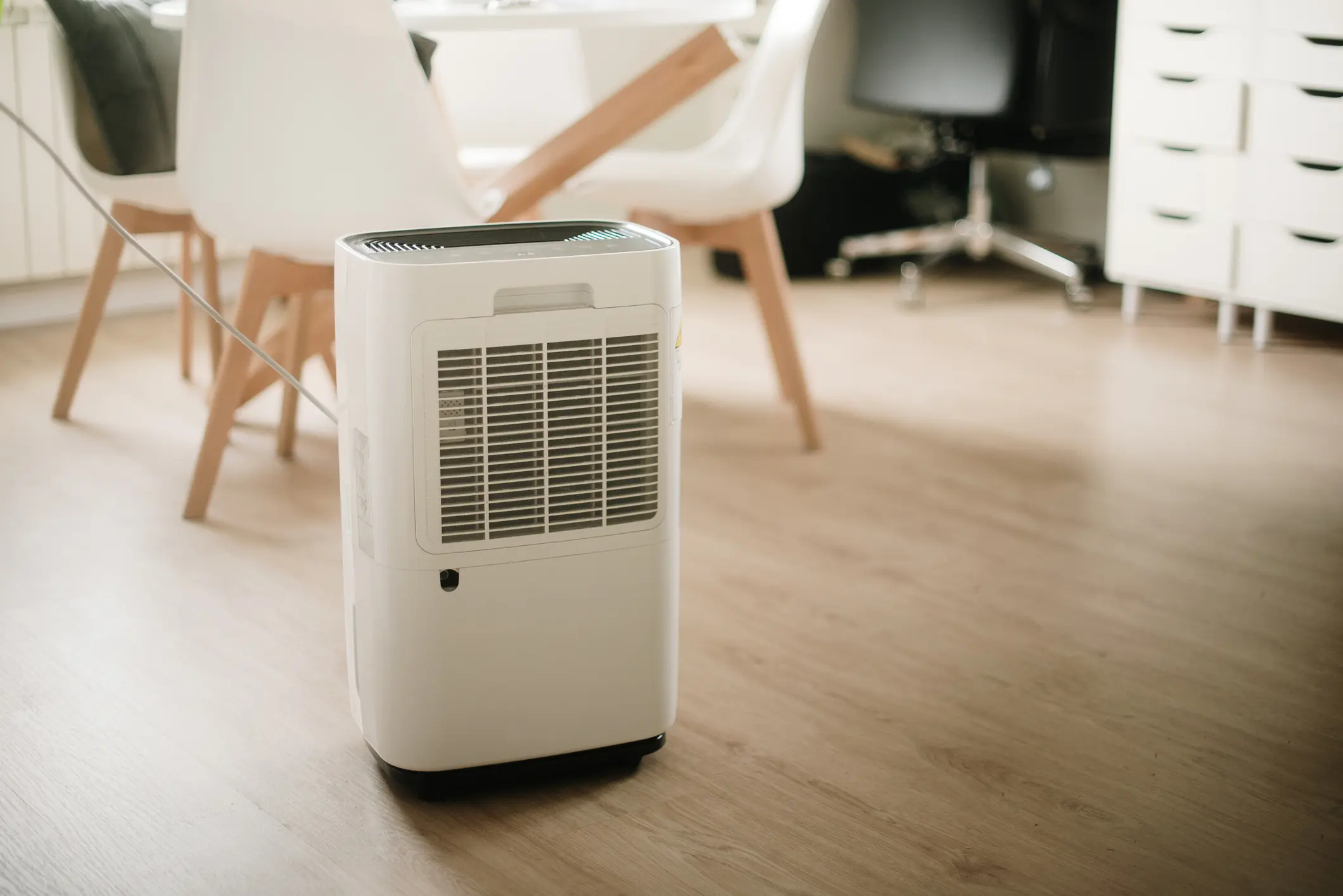
- Dehumidifiers: compressor failure, refrigerant leaks, iced coils, drain issues.
- ERV/HRV and mechanical ventilation: clogged cores, motor failure, core saturation or odor transfer, control malfunctions.
Understanding the typical failure modes in Ochlocknee homes helps prioritize repairs that improve comfort and reduce allergen loads quickly.
On-site inspection and testing procedures
An effective IAQ repair visit combines visual inspection with targeted testing to find root causes, not just symptoms. Typical procedures include:
- System walkthrough: check filters, access panels, condensate drains, humidifier pads, and visible duct connections.
- Airflow and pressure testing: measure supply vs return airflow and detect duct leaks or imbalances.
- Humidity measurement: log indoor relative humidity in multiple rooms to identify areas needing dehumidification or humidification.
- Particle and allergen sampling: spot checks with particle counters to compare pre- and post-repair particulate levels.
- VOC and odor assessment: use handheld sensors or smoke testing to locate source paths for odors and chemical contaminants.
- Electrical and control diagnostics: test sensors, relays, transformers, and control boards in purifiers, HRVs, and humidifiers.
- Coil and heat-exchanger inspection: examine HVAC coils and UV-treated surfaces for biofilm, scale, and dust loads that reduce efficiency.
Each test informs a repair plan that focuses on restoring healthy ventilation, proper humidity control, and effective filtration.
Typical repair solutions and parts replacement
Repairs aim to restore designed IAQ performance while minimizing downtime. Common solutions include:
- Filter and media replacement: upgrade to appropriate MERV or HEPA media and replace clogged prefilters to restore airflow.
- Motor and fan repairs: replace bearings, motors, or fans in purifiers and ERV/HRV units to regain airflow and reduce noise.
- UV lamp and ballast replacement: swap aged UV-C lamps and faulty ballasts to reestablish coil sanitization.
- Sensor recalibration or replacement: fix humidity, CO2, and VOC sensors to ensure accurate control and avoid overrun conditions.
- Humidifier/dehumidifier service: descale and replace pads, repair water valves, fix refrigerant leaks, or replace compressors as needed.
- Core and heat-recovery repairs: clean or replace ERV/HRV cores, repair seals to stop odor transfer and restore heat/moisture exchange efficiency.
- Control board and relay replacement: update faulty electronics that prevent systems from operating on schedule or responding to indoor conditions.
- Duct sealing and insulation: isolate bypasses, seal connections, and insulate to prevent moisture problems and maintain balanced airflow.
Parts commonly stocked for prompt repairs include filters (various sizes and ratings), UV lamps and ballasts, motors and fans, sensors, humidifier pads and valves, compressor components for dehumidifiers, and replacement cores for ERV/HRV systems.
Response times, warranty options, and emergency repair
- Response times: typical non-emergency repairs are scheduled within 24 to 72 hours. For situations involving active water infiltration, severe mold growth, or loss of ventilation that affects health, same-day or next-business-day emergency service is often available.
- Warranty and coverage: repairs may include a service warranty on labor and a parts warranty tied to manufacturer coverage. Warranty terms vary by component type; common protection includes limited labor guarantees for a defined period and manufacturer parts warranties. Documentation of replaced parts and warranty terms is provided with each repair.
- Emergency options: emergency diagnostics prioritize stopping ongoing damage (for example, addressing condensate backups, uncontrolled humidity, or systems that are smoking or producing strong odors). Temporary measures may be implemented on-site while a long-term repair plan is arranged.
Preventive steps and maintenance to avoid repeat repairs
- Replace filters on schedule and use the right MERV rating for your HVAC and purifier equipment.
- Keep coils and drain pans clean to prevent microbial growth that undermines UV and filtration effectiveness.
- Monitor indoor humidity year-round; aim for 40 to 50 percent in humid months to limit mold growth without causing dryness in winter.
- Run balanced ventilation (ERV/HRV) during pollen season to reduce the need for windows open and limit indoor particle loads.
- Perform annual IAQ system inspections before the high-humidity season and after major storms to catch issues early.
Timely maintenance reduces the frequency of emergency repairs and prolongs equipment life while preserving indoor comfort.
Benefits of timely IAQ repair for Ochlocknee homes
Prompt diagnosis and repair restores effective filtration and ventilation, reduces allergy triggers and odors, improves comfort, and reduces strain on HVAC systems—leading to lower operating costs and fewer system failures. In Ochlocknee, where humidity and seasonal allergens are major factors, properly functioning humidifiers, dehumidifiers, UV systems, and filtration make a measurable difference in indoor health and comfort.
If your home in Ochlocknee, FL is experiencing persistent odors, high humidity, unusual allergy symptoms, or reduced system performance, a targeted IAQ repair approach addresses root causes and restores a healthy indoor environment.
hear what our satisfied clients have to say
.avif)

I have nothing but great things to say about this company! From the initial call to trouble shoot our old system to the installation of the new system. Maya was awesome and patient with us and the bank. Stratton, Wilton, and Austin did the removal and install of the systems and they were professional and proficient. I will be recommending this company to everyone and anyone! Thank you for making this less stressful then it needed to be. I'm very grateful for the help and comfort they have given me and my family.
We’ve had issues with our a/c unit freezing up off and on for a month or so. Aden from Keith Key came out and checked our system out. He fixed an issue with the bypass valve and also tuned our fan. Additionally we also replaced our thermostats with new T10’s. He took his time and helped me connect all of them to the WiFi and the app.Aden is very friendly and knowledgeable. I haven’t had an issue with my system since. He was also willing to accept the assistance of our overly helpful shih tzu. Call Keith Key and Aden for any issues with hvac systems, they can get it fixed!
Tryston was amazing! So knowledgeable, pleasant and respectful. Keith Key H/A will forever have my family's business
We had a tenant with no heat during the recent 29 degree weather. I called Keith Key Heating and Air before office hours and left my infomation with their answering service. I got a call back from the office promptly at 8:00 a.m. They were able to schedule us for service the same day. The technician arrived at noon, diagnosed the issue and made the repair. The price was quite reasonable. Everyone that we dealt with was friendly, professional and knowledgeable. I would highly recommend them and will be using them again in the future. Thanks Keith Key Heating & Air!!
Heat wasn't working after the sleet storm and being without power for 18 hours. Keith Key sent Trystan the same day as my call. He did a great job (very personable) and got it repaired in no time. Many thanks!
Keith Key HVAC is wonderful! They service our HVAC and just helped me with a super stressful heating issue while I was out of state. They are very organized and professional, and take extra time to explain and follow up. I just love them!
We've called on Keith Key Heating and Air twice for help. Both times, they responded quickly, and were able to make repairs quickly. The techs we've dealt with have been friendly, reliable, professional and knowledgeable. And they don't dig in your pocket like some have been known to do. I honestly don't know what more we could ask for. A solid 10 of 10, and we highly recommend.
Had to replace my AC and Heating unit. Keith Key Heating and Air was very helpful in finding the right unit money wise for me. The young men they sent was courteous and knowledgeable. They made sure everything was up to my standards before they left. If you have trouble I would highly recommend them to you.
Keith Key regularly services both our personal home and one of our rental properties! They are good about communicating to us about the condition of the units at the rental property which is such a relief! We have had to call them for 2 emergencies and both times the techs appeared happy to be there helping us despite being on the weekend! 10/10 recommend.
Service Areas