HVAC Replacement in Alligator Point, FL
HVAC Repair in Lake Stevens, WA: Restoring Your Home's Comfort
When your heating or cooling system falters in Lake Stevens, WA, it's more than just an inconvenience; it impacts your home's comfort and potentially your indoor air quality. A malfunctioning HVAC system can lead to uncomfortable temperatures, rising energy bills, and even safety concerns. Prompt, reliable repair is essential to quickly restore function and ensure your home remains a comfortable sanctuary, no matter the season outside.
Addressing HVAC issues swiftly with professional service helps prevent minor problems from escalating into costly breakdowns. Whether your air conditioner isn't cooling on a hot summer day or your furnace fails during a cold winter night, having experienced technicians available to diagnose and resolve the issue efficiently is crucial for maintaining your peace of mind and comfort.
HVAC Replacement in Alligator Point, FL
Replacing an HVAC system is a major decision for homeowners in Alligator Point, FL. With year-round heat, high humidity, salt air from the Gulf, and occasional severe storms, older or undersized systems struggle to keep homes comfortable and efficient. This page explains when full system replacement is recommended, describes the replacement process in clear steps, compares energy-efficient options and expected lifecycle savings, outlines common financing approaches, and summarizes warranties and timelines tailored to Alligator Point homes.
When full HVAC replacement is the right choice
Consider full replacement when one or more of the following apply:
- Your system is 12 to 15 years old or older and has needed frequent repairs. Aging compressors and coils are less efficient and more prone to failure in coastal climates.
- Repair costs over the past 12 months approach 50% of a new system price. Repeated repairs are a sign of declining reliability and efficiency.
- Your energy bills keep rising despite routine maintenance. In Alligator Point, cooling load is high for most of the year, so an inefficient system can significantly increase utility costs.
- Comfort problems persist after repairs: uneven temperatures, humidity issues, or inability to maintain setpoints. Salt corrosion and high humidity can degrade components that affect performance.
- You plan major home changes (insulation upgrades, room additions, or new windows) that change heating and cooling needs. A full replacement lets you right-size the system with accurate load calculations.
Common HVAC replacement issues in Alligator Point, FL
- Coil and compressor corrosion from salty, humid coastal air.
- Reduced efficiency and capacity due to refrigerant phase-outs and older technologies.
- Improperly sized equipment left from previous installations that ignore modern load standards.
- Duct leakage and poor insulation that worsen humidity control and energy loss.
- Frequent component failures after hurricane-force winds or saltwater intrusion.
The HVAC replacement process — step by step
- System evaluation
- Inspect current equipment, ductwork, refrigerant type, and electrical connections.
- Check indoor comfort patterns, humidity control, and recent repair history.
- Assess corrosion or storm damage common in Alligator Point properties.
- Load calculations and home assessment
- Perform an ACCA-based Manual J load calculation to determine accurate heating and cooling capacity needs.
- Evaluate ductwork (Manual D) and airflow to ensure the new system will deliver even comfort and proper dehumidification.
- Factor in local climate effects: long cooling seasons, required dehumidification, and potential for salt corrosion.
- Equipment selection
- Compare matched systems (indoor coil + outdoor condenser) and packaged units where appropriate.
- Consider features that benefit coastal homes: corrosion-resistant coatings, sealed control compartments, and improved filtration to handle salty air and allergens.
- Balance SEER/HSPF ratings with projected lifecycle savings and humidity control needs.
- Removal and responsible disposal
- Safely recover refrigerant per federal and state guidelines.
- Remove and, where applicable, recycle old equipment and components.
- Inspect and prepare the installation area for corrosion prevention and proper airflow.
- Professional installation and commissioning
- Install equipment per manufacturer specifications, including proper refrigerant charge, line-set insulation, and electrical connections.
- Seal and test ductwork airflow and static pressure to ensure performance.
- Commission the system: verify thermostats, controls, safety switches, and dehumidification performance; document operating parameters.
- Final walkthrough and documentation
- Provide homeowners with operating instructions, maintenance schedules, and warranty paperwork.
- Record serial numbers and start-up readings that support future warranty claims.
Energy-efficient models and lifecycle savings
Upgrading to a modern, energy-efficient system can reduce cooling costs substantially in Alligator Point’s warm, humid climate. Key considerations:
- SEER (Seasonal Energy Efficiency Ratio) and HSPF ratings: Higher SEER units can lower electricity use, but the best choice balances efficiency with humidity control. Very high SEER units sometimes reduce runtime, which can diminish dehumidification in humid climates unless matched with appropriate indoor coils and controls.
- Variable-speed compressors and multi-stage systems: These provide better humidity control and more consistent comfort than single-stage units, improving perceived comfort while often saving energy.
- Heat pump options: Modern heat pumps are efficient year-round in Florida’s mild winters and eliminate the need for separate heating systems in most cases.
- Ductless mini-splits: Useful for additions or rooms with difficult ductwork; high efficiency and zoned control improve comfort and reduce wasted energy.
Expected lifecycle savings depend on current system efficiency, usage patterns, and electricity rates. In Alligator Point, replacing an older low-SEER unit with a properly sized modern heat pump or high-SEER split system typically yields noticeable monthly savings and improved humidity control, which also protects home materials from moisture-related damage.
Financing approaches (what to expect)
Homeowners commonly use these financing methods for HVAC replacement:
- Home equity or mortgage-based financing: Uses home equity lines or second mortgages for lower interest rates over longer terms.
- Personal loans: Fixed-term loans through banks or credit unions; useful when homeowners prefer not to use home equity.
- Manufacturer or vendor financing programs: Often available with structured monthly payments; terms vary by provider and credit approval.
- Energy-efficient upgrade incentives and rebates: Check for utility or state-level rebates for high-efficiency systems that can lower upfront costs.
Discussing multiple options during planning helps match payment structure to the homeowner’s budget and timeline without affecting system selection or installation quality.
Warranties and typical timelines
- Manufacturer warranties: Most compressors and major components carry limited warranties (commonly 5 to 10 years); extended warranties may be available for parts and labor. Corrosion-prone coastal installations may require specific protective measures to preserve warranty validity.
- Installation warranties: Professional installers often provide labor warranties that cover installation-related issues for a set period after completion.
- Timeline: From initial evaluation to system commissioning, expect 1 to 2 weeks for standard residential replacements. Complex jobs—like significant ductwork replacement, permitting, or storm-related repairs—can extend the timeline.
Maintenance and long-term benefits
After replacement, routine maintenance preserves efficiency and extends system life. Key tasks include seasonal inspections, filter changes, coil cleaning, and verifying refrigerant charge and airflow. Coastal homes benefit from more frequent visual inspections for corrosion and protective measures like elevated pad mounts or coated coils.
Long-term benefits of a professionally designed and installed replacement in Alligator Point include improved comfort year-round, lower energy bills, better humidity control that protects interior finishes, and increased home value. Choosing equipment and installation strategies suited to the coastal environment helps maximize reliability and return on investment over the system’s lifetime.
By planning replacement around accurate load calculations, corrosion-resistant components, and proper commissioning, Alligator Point homeowners can achieve a durable, efficient HVAC solution tailored to the unique demands of the Gulf Coast climate.
hear what our satisfied clients have to say
.avif)

I have nothing but great things to say about this company! From the initial call to trouble shoot our old system to the installation of the new system. Maya was awesome and patient with us and the bank. Stratton, Wilton, and Austin did the removal and install of the systems and they were professional and proficient. I will be recommending this company to everyone and anyone! Thank you for making this less stressful then it needed to be. I'm very grateful for the help and comfort they have given me and my family.
We’ve had issues with our a/c unit freezing up off and on for a month or so. Aden from Keith Key came out and checked our system out. He fixed an issue with the bypass valve and also tuned our fan. Additionally we also replaced our thermostats with new T10’s. He took his time and helped me connect all of them to the WiFi and the app.Aden is very friendly and knowledgeable. I haven’t had an issue with my system since. He was also willing to accept the assistance of our overly helpful shih tzu. Call Keith Key and Aden for any issues with hvac systems, they can get it fixed!
Tryston was amazing! So knowledgeable, pleasant and respectful. Keith Key H/A will forever have my family's business
We had a tenant with no heat during the recent 29 degree weather. I called Keith Key Heating and Air before office hours and left my infomation with their answering service. I got a call back from the office promptly at 8:00 a.m. They were able to schedule us for service the same day. The technician arrived at noon, diagnosed the issue and made the repair. The price was quite reasonable. Everyone that we dealt with was friendly, professional and knowledgeable. I would highly recommend them and will be using them again in the future. Thanks Keith Key Heating & Air!!
Heat wasn't working after the sleet storm and being without power for 18 hours. Keith Key sent Trystan the same day as my call. He did a great job (very personable) and got it repaired in no time. Many thanks!
Keith Key HVAC is wonderful! They service our HVAC and just helped me with a super stressful heating issue while I was out of state. They are very organized and professional, and take extra time to explain and follow up. I just love them!
We've called on Keith Key Heating and Air twice for help. Both times, they responded quickly, and were able to make repairs quickly. The techs we've dealt with have been friendly, reliable, professional and knowledgeable. And they don't dig in your pocket like some have been known to do. I honestly don't know what more we could ask for. A solid 10 of 10, and we highly recommend.
Had to replace my AC and Heating unit. Keith Key Heating and Air was very helpful in finding the right unit money wise for me. The young men they sent was courteous and knowledgeable. They made sure everything was up to my standards before they left. If you have trouble I would highly recommend them to you.
Keith Key regularly services both our personal home and one of our rental properties! They are good about communicating to us about the condition of the units at the rental property which is such a relief! We have had to call them for 2 emergencies and both times the techs appeared happy to be there helping us despite being on the weekend! 10/10 recommend.
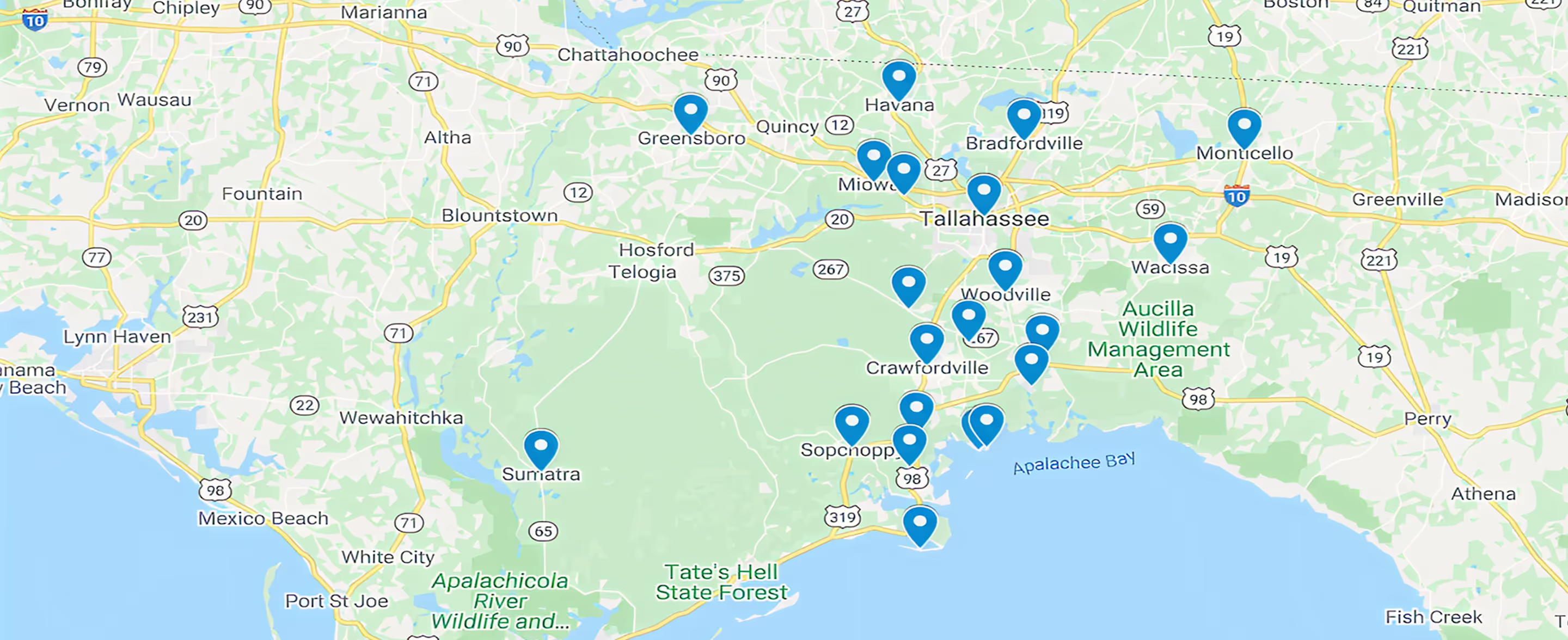
Service Areas