IAQ Service in Woodville, FL

Woodville IAQ services provide comprehensive assessment, diagnostic testing, and targeted solutions to improve indoor air quality year-round. A thorough on-site evaluation identifies humidity, mold risk, odors, and contaminants, followed by precise testing for particulates, VOCs, and carbon monoxide. Solutions include filtration upgrades, UV germicidal lights, dehumidification, improved ventilation, and duct sealing, with maintenance plans to sustain results. The program serves homes and light-commercial properties, offering clear findings, prioritized recommendations, and ongoing monitoring to protect occupants and equipment.
IAQ Service in Woodville, FL
Indoor air quality (IAQ) matters year-round in Woodville, FL. High humidity, seasonal pollen, coastal moisture, and older HVAC systems combine to create common problems: mold growth, persistent odors, allergy triggers, and reduced HVAC efficiency. This IAQ service overview explains assessments, diagnostic testing, installations, repairs, replacements, maintenance plans, and targeted solutions for allergens and odors so Woodville homeowners and light-commercial property managers can decide on the right strategy.
Why IAQ matters in Woodville, FL
- Humidity-driven mold and mildew: Warm, humid conditions encourage mold in attics, crawlspaces, ducts, and wall cavities.
- Seasonal pollen and outdoor allergens: Tallahassee-area vegetation and nearby wetlands increase pollen counts that infiltrate buildings.
- Dust mites and biological contaminants: Humidity supports dust mite populations and biological growth on HVAC components.
- Odors and VOCs: Household chemicals, paints, and cleaning products release volatile organic compounds that linger in poorly ventilated spaces.Improving IAQ reduces allergy and asthma symptoms, extends HVAC lifespan, increases energy efficiency, and creates healthier indoor environments for residents and occupants.
Common IAQ issues in Woodville homes and light-commercial spaces
- Visible or hidden mold growth and musty odors
- High indoor humidity (above 50 percent)
- Persistent seasonal allergies despite cleaning
- Dust accumulation and reduced airflow from clogged ducts or filters
- Chemical or cooking odors that linger
- Inadequate ventilation in older buildings or tightly sealed spaces
- Carbon monoxide or combustion byproduct concerns in properties with fuel-burning appliances
IAQ assessment and diagnostic testing
A thorough assessment is the first step. Typical IAQ diagnostics include:
- Visual inspection: attic, crawlspace, ductwork, HVAC components, and moisture sources
- Relative humidity measurement: whole-home and room-by-room readings
- Particle counting: measures PM2.5 and PM10 levels to evaluate particulate concentrations
- Mold spore air sampling and surface swabs: identifies species and relative concentrations for lab analysis
- VOC screening: handheld meters for common volatile compounds, with follow-up laboratory testing if levels are elevated
- Carbon monoxide and combustion testing: ensures safe operation of furnaces, water heaters, and generators
- Pressure and airflow testing: reveals duct leaks, imbalance, and inadequate ventilation
- Thermal imaging: locates moisture intrusion and missing insulation that promote microbial growth
Reports from diagnostic testing include clear findings, health-relevant thresholds, and prioritized recommendations so property owners can make informed decisions.
Typical IAQ installations, repairs, and replacements
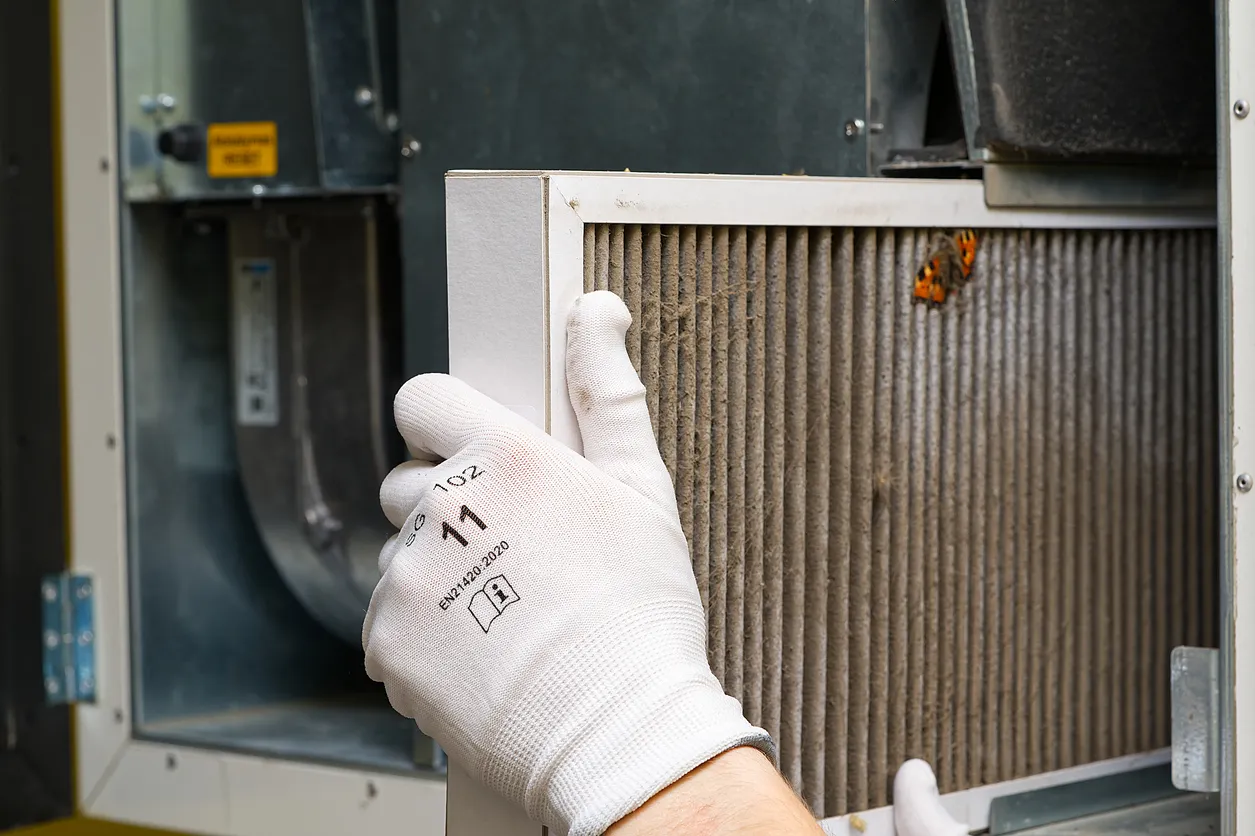
- Filtration upgrades: High-efficiency filters (MERV 13 where compatible) and whole-house HEPA systems to capture fine particulates and allergens.
- UV germicidal lights: Installed in air handlers to reduce microbial growth on coils and drip pans.
- Whole-house dehumidifiers and ducted systems: Control humidity in humid climates to prevent mold and dust mite proliferation.
- Duct cleaning and sealing: Removes settled dust, biofilm, and allergens; sealing reduces infiltration and improves system efficiency.
- Ventilation improvements: Installation of controlled mechanical ventilation or energy recovery ventilators (ERVs) to introduce fresh air without excessive humidity.
- Activated carbon or specialized media: Target VOCs and odors from cooking, smoke, and chemicals.
- Replacement of failing components: Damaged duct sections, corroded coils, fan motors, or aging filters that compromise air quality.
For light-commercial clients, upgrades might include higher-capacity filtration, zoned ventilation for different occupancy levels, and scheduled service contracts to meet health and code expectations.
Typical IAQ service process
- Initial consultation and on-site assessment: Document symptoms, occupant complaints, and building history.
- Diagnostic testing: Collect objective measurements and samples.
- Findings report and solution plan: Prioritized interventions with expected outcomes and operational notes.
- Implementation: Perform installations, repairs, and replacements with attention to contained work practices to avoid spreading contaminants.
- Verification testing: Post-service testing to confirm improvements in particulate counts, humidity, and odor levels.
- Ongoing maintenance or service plan: Regular filter changes, humidity monitoring, and seasonal checks protect IAQ gains.
Indoor air testing options explained
- Basic IAQ screen: Visual inspection, humidity and CO checks, and particle monitor snapshots—good for urgent concerns.
- Comprehensive IAQ lab testing: Air and surface samples for mold species and VOC panels—recommended when occupants have health symptoms or when remediation decisions depend on species data.
- Targeted allergen testing: Particle counts plus specific mold or pollen panels for allergy-sensitive occupants.
- Post-remediation verification: Follow-up sampling to confirm mold removal or odor remediation success.
Each testing tier balances cost, invasiveness, and the level of detail needed to make a confident decision.
Common solutions for allergens and odors
- Pollen and outdoor allergens: Improve filtration (HEPA/MERV upgrades), establish positive pressure ventilation, and add entryway mats and door sweeps to reduce tracking.
- Mold and musty smells: Address moisture sources, install dehumidifiers, clean and treat affected surfaces and ducts, and use UV lights to reduce regrowth.
- Dust mites: Maintain indoor RH below 50 percent, use HEPA filtration, and clean bedding and fabrics regularly.
- Cooking and smoke odors: Install range hoods vented outdoors, use activated carbon filtration, and increase ventilation exchange rates.
- Chemical odors and VOCs: Source control (store chemicals outside or in sealed cabinets), increase fresh air exchange, and use carbon/chemical adsorbent filters.
IAQ maintenance plans for long-term results
- Scheduled filter replacement and HVAC inspections aligned with Florida’s humid seasons
- Quarterly or semi-annual humidity and system checks in high-risk months
- Duct inspections every 2-4 years or after water intrusion events
- Yearly verification testing for commercial sites or sensitive residencesMaintenance plans reduce emergency repairs, keep equipment efficient, and sustain healthy indoor environments.
Final considerations for Woodville properties
Woodville’s humid climate and seasonal pollen cycles make proactive IAQ strategies especially valuable. Timely humidity control, filtration upgrades, and source reduction often deliver the largest health and efficiency gains. Whether you manage a family home or a small commercial facility, a targeted IAQ assessment followed by prioritized repairs, installations, and a maintenance plan will protect occupants and building systems while addressing allergy and odor concerns common to this region.
hear what our satisfied clients have to say
.avif)

I have nothing but great things to say about this company! From the initial call to trouble shoot our old system to the installation of the new system. Maya was awesome and patient with us and the bank. Stratton, Wilton, and Austin did the removal and install of the systems and they were professional and proficient. I will be recommending this company to everyone and anyone! Thank you for making this less stressful then it needed to be. I'm very grateful for the help and comfort they have given me and my family.
We’ve had issues with our a/c unit freezing up off and on for a month or so. Aden from Keith Key came out and checked our system out. He fixed an issue with the bypass valve and also tuned our fan. Additionally we also replaced our thermostats with new T10’s. He took his time and helped me connect all of them to the WiFi and the app.Aden is very friendly and knowledgeable. I haven’t had an issue with my system since. He was also willing to accept the assistance of our overly helpful shih tzu. Call Keith Key and Aden for any issues with hvac systems, they can get it fixed!
Tryston was amazing! So knowledgeable, pleasant and respectful. Keith Key H/A will forever have my family's business
We had a tenant with no heat during the recent 29 degree weather. I called Keith Key Heating and Air before office hours and left my infomation with their answering service. I got a call back from the office promptly at 8:00 a.m. They were able to schedule us for service the same day. The technician arrived at noon, diagnosed the issue and made the repair. The price was quite reasonable. Everyone that we dealt with was friendly, professional and knowledgeable. I would highly recommend them and will be using them again in the future. Thanks Keith Key Heating & Air!!
Heat wasn't working after the sleet storm and being without power for 18 hours. Keith Key sent Trystan the same day as my call. He did a great job (very personable) and got it repaired in no time. Many thanks!
Keith Key HVAC is wonderful! They service our HVAC and just helped me with a super stressful heating issue while I was out of state. They are very organized and professional, and take extra time to explain and follow up. I just love them!
We've called on Keith Key Heating and Air twice for help. Both times, they responded quickly, and were able to make repairs quickly. The techs we've dealt with have been friendly, reliable, professional and knowledgeable. And they don't dig in your pocket like some have been known to do. I honestly don't know what more we could ask for. A solid 10 of 10, and we highly recommend.
Had to replace my AC and Heating unit. Keith Key Heating and Air was very helpful in finding the right unit money wise for me. The young men they sent was courteous and knowledgeable. They made sure everything was up to my standards before they left. If you have trouble I would highly recommend them to you.
Keith Key regularly services both our personal home and one of our rental properties! They are good about communicating to us about the condition of the units at the rental property which is such a relief! We have had to call them for 2 emergencies and both times the techs appeared happy to be there helping us despite being on the weekend! 10/10 recommend.
Service Areas