HVAC Replacement in Carrabelle, FL
HVAC Repair in Lake Stevens, WA: Restoring Your Home's Comfort
When your heating or cooling system falters in Lake Stevens, WA, it's more than just an inconvenience; it impacts your home's comfort and potentially your indoor air quality. A malfunctioning HVAC system can lead to uncomfortable temperatures, rising energy bills, and even safety concerns. Prompt, reliable repair is essential to quickly restore function and ensure your home remains a comfortable sanctuary, no matter the season outside.
Addressing HVAC issues swiftly with professional service helps prevent minor problems from escalating into costly breakdowns. Whether your air conditioner isn't cooling on a hot summer day or your furnace fails during a cold winter night, having experienced technicians available to diagnose and resolve the issue efficiently is crucial for maintaining your peace of mind and comfort.
-min.jpeg)
HVAC Replacement in Carrabelle, FL
Replacing an aging or failing HVAC system is one of the most impactful investments a homeowner or light commercial property owner can make in Carrabelle, FL. With long, hot, humid summers and salty coastal air, systems here face higher cooling loads and faster corrosion than in many inland areas. This page explains when full-system replacement is recommended, how on-site evaluations and right-sizing work, the differences between high-efficiency models, removal and disposal practices, installation timelines, warranty considerations, expected energy savings, and practical guidance to select the best option for your Carrabelle home or business.
When replacement is recommended
- Repeated major repairs: If compressors, evaporator coils, or control boards fail more than once in a short span, replacement is usually more cost-effective than repair.
- Age and declining efficiency: Systems older than 10 to 15 years typically lose efficiency and reliability. Older units can also use refrigerants no longer supported by modern equipment.
- Uneven comfort and high humidity: If some rooms are consistently too warm or humid despite repairs, improper capacity or duct issues may mean replacement and right-sizing are needed.
- Corrosion or physical damage from coastal conditions: Salt air accelerates rust on outdoor units and components. Visible corrosion on coils, refrigerant lines, or pan and fasteners is a common replacement trigger in Carrabelle.
- High energy bills: When routine maintenance and repairs fail to reduce escalating utility bills, a properly sized high-efficiency system usually reduces monthly cooling costs.
On-site evaluation, load calculations, and right-sizing
A professional on-site evaluation is the foundation of a successful replacement. Evaluators will:
- Inspect the existing equipment, ductwork, insulation, attic ventilation, and home orientation.
- Check refrigerant lines, condensate drainage, and electrical service capacity.
- Perform a Manual J load calculation to determine the correct cooling and heating capacity based on square footage, window types, insulation levels, occupancy, and local weather patterns. In Carrabelle, the calculation emphasizes higher cooling loads and latent cooling needs because of humidity.
- Conduct duct evaluations to identify leaks, poor insulation, or undersized runs that reduce system performance.
Right-sizing matters. Oversized units cycle on and off too frequently, increasing humidity problems and wear; undersized units run continuously and fail to maintain comfort. The goal is a unit matched to your actual load and your comfort priorities.
Comparing high-efficiency models for Carrabelle homes and light commercial properties
- Central split systems (single-stage, multi-stage, variable-speed):
- Pros: Efficient central cooling for homes with existing ductwork; variable-speed compressors improve humidity control and comfort.
- Cons: Ductwork must be in good condition; coastal exposure still requires corrosion-resistant coatings.
- Heat pumps (air-source and higher-efficiency variants):
- Pros: Excellent for Carrabelle climate where heating needs are modest; provide efficient cooling and heating in one package; modern units achieve high SEER and enhanced humidity control.
- Cons: Salt air may require additional protection; cold-climate heat pumps are unnecessary here and add cost without local benefit.
- Ductless mini-splits:
- Pros: Ideal for additions, conversions, or rooms without ductwork; provide zoning, high efficiency, and precise humidity and temperature control; simpler to install with minimal disruption.
- Cons: Multiple indoor heads for whole-house solutions can raise equipment cost; aesthetics and placement planning are important.
- Hybrid or packaged rooftop units for light commercial:
- Pros: Designed for commercial loads, rooftop installations keep equipment out of tight coastal yards and can simplify service access.
- Cons: Structural supports and local code considerations may be required.
In Carrabelle, prioritize systems with high SEER ratings for cooling efficiency, corrosion-resistant coatings, and features that improve humidity control like variable-speed blowers and multi-stage compressors.
Removal, disposal, and environmental compliance
Proper removal includes safe refrigerant recovery, disconnecting electrical service, and hauling away the old condensing unit, air handler, or furnace. Coastal installations may require careful handling of corroded components to avoid damage during removal. Disposal follows local and federal regulations for refrigerant reclamation and recycling of metals. Always verify that technicians document refrigerant recovery and provide disposal receipts in line with environmental compliance.
Typical installation timeline and what to expect
- Initial site evaluation and load calculation: 1 visit, 1 to 2 hours
- Equipment selection and scheduling: typically days to a few weeks depending on model availability and permit requirements
- Permitting and any electrical or ductwork upgrades: variable, often a few days to a week
- Removal and replacement: most residential jobs are completed in 1 to 3 days; light commercial or larger installs may take longer
- Final testing, commissioning, and homeowner walkthrough: included on the last day to verify system performance and thermostat setup
Expect technicians to verify refrigerant charge, airflow, static pressures, and thermostat calibration before signing off. For coastal installs, additional measures like elevated pads, corrosion-resistant fasteners, and sacrificial anodes may be part of the work.
Warranty, manufacturer guarantees, financing, and rebates
New systems come with manufacturer warranties on compressors and heat exchangers, and many components carry separate warranties. Understand the difference between the manufacturer warranty and any labor warranty offered by installers. Proper installation and routine maintenance are typically required to keep warranties valid.
Financing options are commonly available through HVAC lenders or third-party programs for qualifying applicants. Energy rebates and incentives may include federal tax credits for qualifying high-efficiency equipment, state or local utility rebates, and manufacturer promotions. Local programs in Florida often reward upgrades that reduce energy consumption and peak demand; check current program details and eligibility before equipment selection.
Energy savings estimates
Upgrading from an older 8 to 10 SEER system to a modern 16 to 20+ SEER heat pump or split system can reduce cooling energy use by 20 to 40 percent, depending on usage patterns and duct performance. Ductless mini-splits and variable-speed systems offer additional savings through zoning and reduced standby losses. Realized savings will depend on:
- Current system efficiency and age
- Proper sizing and installation quality
- Ductwork condition and insulation
- Occupant behavior and thermostat settings
Typical payback periods vary, but energy savings combined with available rebates and tax incentives can substantially shorten the time to net savings.
Choosing the best option for your Carrabelle property
Consider these factors when selecting replacement equipment:
- Existing ductwork condition: Repair or replace leaky ducts or opt for ductless zoning.
- Home size and layout: Larger open-plan spaces favor central systems; multi-zone layouts benefit from mini-splits or multi-zone heat pumps.
- Humidity control: Choose variable-speed or multi-stage systems to manage Carrabelle humidity effectively.
- Coastal durability: Specify units with corrosion protection, stainless hardware, and protective coatings.
- Future needs and efficiency goals: If lowering operating costs and reducing environmental impact are priorities, target higher SEER ratings and Energy Star qualified models.
- Budget and incentives: Balance upfront cost, available financing, and potential rebates to find the most cost-effective long-term solution.
Benefits of timely replacement and maintenance
A properly designed and installed replacement system improves comfort, reduces humidity issues, lowers operating costs, and increases indoor air quality. For properties in Carrabelle, choosing equipment and installation practices that mitigate coastal corrosion and address high cooling loads ensures longer service life and more reliable performance. Regular maintenance after replacement preserves efficiency and warranty coverage, protecting your investment.
Selecting the right HVAC replacement for your Carrabelle home or light commercial property means matching equipment to your climate, building characteristics, and comfort goals. With accurate load calculations, corrosion-aware equipment choices, and professional installation, replacement becomes an upgrade that pays back in comfort, reliability, and energy savings.
hear what our satisfied clients have to say
.avif)

I have nothing but great things to say about this company! From the initial call to trouble shoot our old system to the installation of the new system. Maya was awesome and patient with us and the bank. Stratton, Wilton, and Austin did the removal and install of the systems and they were professional and proficient. I will be recommending this company to everyone and anyone! Thank you for making this less stressful then it needed to be. I'm very grateful for the help and comfort they have given me and my family.
We’ve had issues with our a/c unit freezing up off and on for a month or so. Aden from Keith Key came out and checked our system out. He fixed an issue with the bypass valve and also tuned our fan. Additionally we also replaced our thermostats with new T10’s. He took his time and helped me connect all of them to the WiFi and the app.Aden is very friendly and knowledgeable. I haven’t had an issue with my system since. He was also willing to accept the assistance of our overly helpful shih tzu. Call Keith Key and Aden for any issues with hvac systems, they can get it fixed!
Tryston was amazing! So knowledgeable, pleasant and respectful. Keith Key H/A will forever have my family's business
We had a tenant with no heat during the recent 29 degree weather. I called Keith Key Heating and Air before office hours and left my infomation with their answering service. I got a call back from the office promptly at 8:00 a.m. They were able to schedule us for service the same day. The technician arrived at noon, diagnosed the issue and made the repair. The price was quite reasonable. Everyone that we dealt with was friendly, professional and knowledgeable. I would highly recommend them and will be using them again in the future. Thanks Keith Key Heating & Air!!
Heat wasn't working after the sleet storm and being without power for 18 hours. Keith Key sent Trystan the same day as my call. He did a great job (very personable) and got it repaired in no time. Many thanks!
Keith Key HVAC is wonderful! They service our HVAC and just helped me with a super stressful heating issue while I was out of state. They are very organized and professional, and take extra time to explain and follow up. I just love them!
We've called on Keith Key Heating and Air twice for help. Both times, they responded quickly, and were able to make repairs quickly. The techs we've dealt with have been friendly, reliable, professional and knowledgeable. And they don't dig in your pocket like some have been known to do. I honestly don't know what more we could ask for. A solid 10 of 10, and we highly recommend.
Had to replace my AC and Heating unit. Keith Key Heating and Air was very helpful in finding the right unit money wise for me. The young men they sent was courteous and knowledgeable. They made sure everything was up to my standards before they left. If you have trouble I would highly recommend them to you.
Keith Key regularly services both our personal home and one of our rental properties! They are good about communicating to us about the condition of the units at the rental property which is such a relief! We have had to call them for 2 emergencies and both times the techs appeared happy to be there helping us despite being on the weekend! 10/10 recommend.
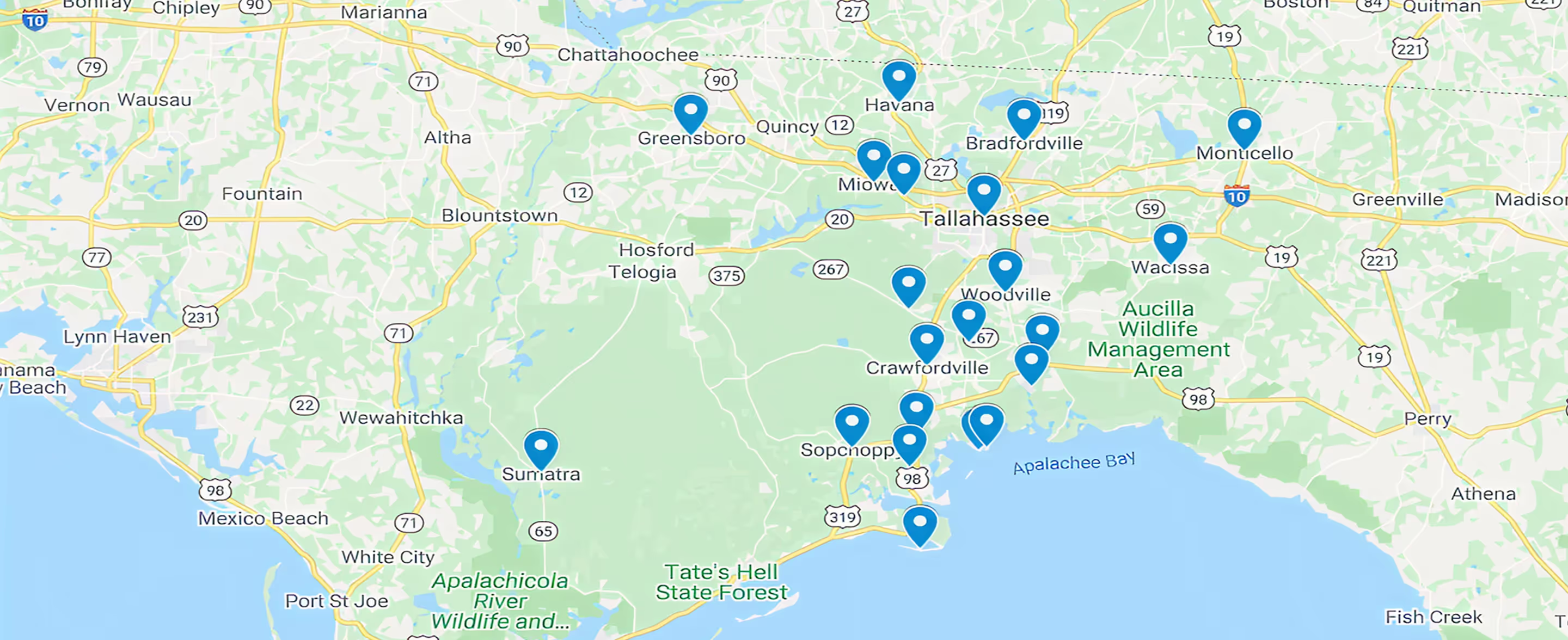
Service Areas