AC Repair in St. Marks, FL
St. Marks residents rely on reliable AC service to combat heat, humidity, and coastal corrosion. This page outlines common repair symptoms, from reduced climate-control performance and refrigerant leaks to frozen coils and noisy equipment, and explains diagnostic steps, including electrical tests, refrigerant checks, and corrosion inspections. It describes practical, priority-based repairs and when replacement is advisable, along with emergency-response options, scheduling guidance, and preventive tips to extend system life and maintain healthy indoor air in a demanding Gulf Coast climate.
AC Repair in St. Marks, FL
Living on the Gulf coast means long, hot, humid summers and exposure to salty air. For St. Marks homes, a fully functioning air conditioning system is not a luxury—it is essential for comfort, health, and protecting your home from moisture-related damage. This AC repair page explains the common AC problems in St. Marks, how technicians diagnose issues, what typical repairs involve (including emergency repairs), the benefits of addressing problems quickly, and what to expect when you schedule a service call.
Why AC problems are common in St. Marks, FL
St. Marks’ warm, humid climate puts continuous strain on air conditioners. High humidity makes units run longer to keep indoor air comfortable. Coastal salt and wind accelerate corrosion on outdoor condensers, electrical components, and refrigerant lines. Storms and power surges during hurricane season also increase the risk of sudden failures. Understanding these local factors helps explain why timely repairs and corrosion-aware service practices are particularly important in this area.
Common AC problems in St. Marks
Homeowners in St. Marks frequently report these issues:
- Insufficient cooling or warm air: Often caused by low refrigerant, a failing compressor, or restricted airflow.
- Frequent short cycling: The system turns on and off quickly, usually due to thermostat issues, improper sizing, or electrical faults.
- Poor airflow: Dirty air filters, blocked return vents, or failing blower motors reduce air volume.
- Frozen evaporator coil: Typically the result of restricted airflow or low refrigerant pressure.
- Refrigerant leaks: Corrosion and vibration can cause lines to leak, lowering efficiency and cooling capacity.
- Strange noises: Grinding, rattling, or hissing point toward failing motors, loose components, or refrigerant escape.
- Water leaks or overflowing condensate drain: High humidity and clogged drains lead to water damage and mold risk.
- Electrical failures: Corroded contacts, bad capacitors, or tripped breakers are common in coastal climates.
- Thermostat errors or sensor problems: Misreading indoor temperature leads to uneven comfort or system misbehavior.
How diagnostic inspections work
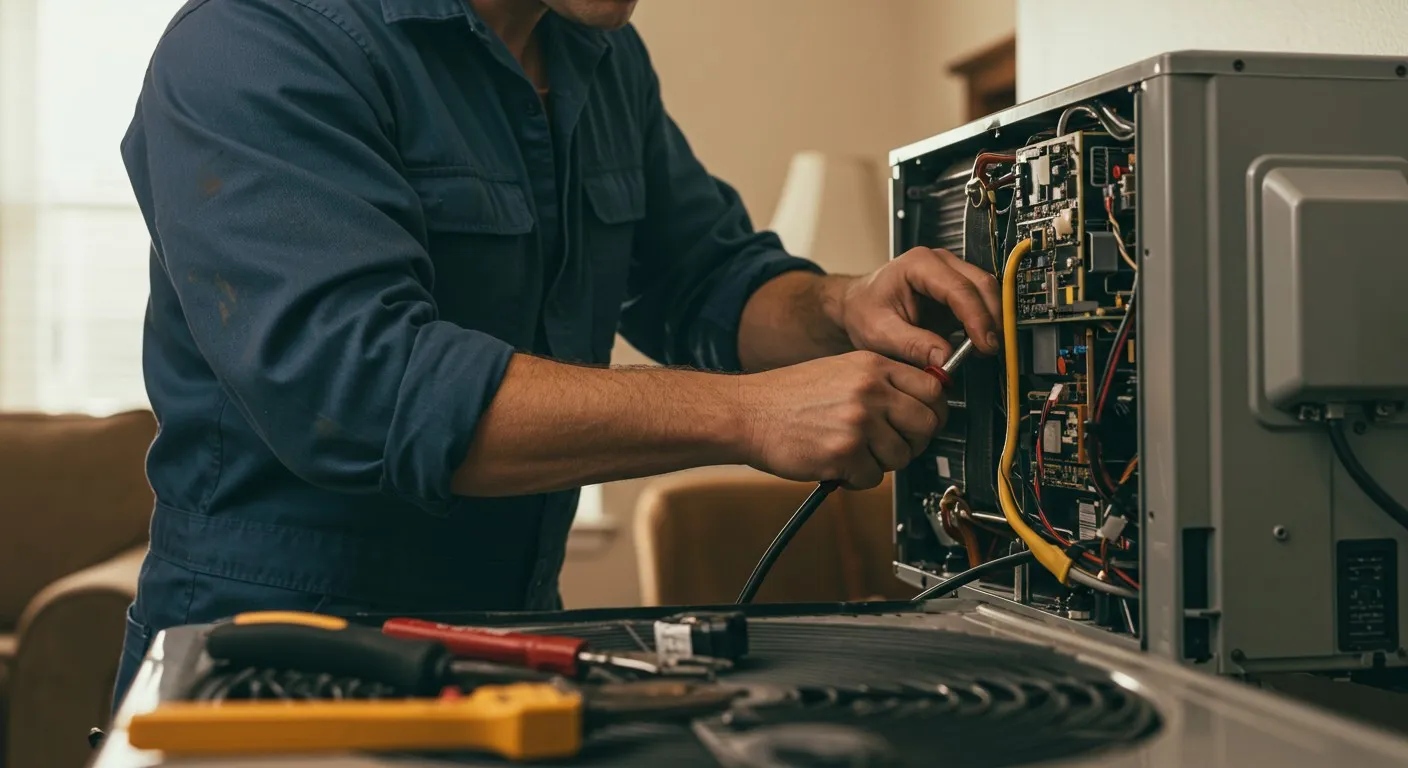
A reliable diagnostic process identifies the underlying cause rather than treating symptoms. Typical diagnostic steps include:
- Initial interview and symptom review
- The technician documents what you’ve observed: noises, smell, when the problem occurs, and any recent weather or power events.
2. Visual inspection
- Check the condenser, refrigerant lines, access panels, filter condition, duct openings, and thermostat location.
3. Airflow and temperature checks
- Measure return and supply temperatures and compare to expected temperature drop across the evaporator coil.
4. Electrical testing
- Test capacitors, contactors, fuses, and voltage under load to find intermittent or failing electrical components.
5. Refrigerant pressure and leak detection
- Measure system pressures to confirm proper refrigerant charge and use leak detection methods when pressure is low.
6. Mechanical evaluation
- Inspect blower motor, fan motor, compressor startup behavior, and belts or bearings for wear.
7. Condensate and drainage check
- Examine drain pan and lines for clogs, algae, or damage that would prevent proper drainage.
A clear diagnostic report should outline the problem, the cause, and recommended repair or replacement options. In St. Marks, diagnostics will also include checks for corrosion and salt-related damage.
Typical repairs and solutions explained
Repair options are chosen based on the diagnostic findings and the age of the equipment. Common repairs include:
- Recharging refrigerant and repairing leaks: Locating and repairing refrigerant leaks and restoring the proper charge improves cooling and efficiency. Leaks in corroded lines may require line replacement.
- Compressor repair or replacement: When compressors fail, replacement is often the long-term solution. Temporary fixes may restore function but are generally short-lived.
- Replacing capacitors, contactors, and motors: These electrical components wear out more quickly in humid, salty environments and are common causes of failures.
- Cleaning or replacing coils and filters: Dirty coils reduce efficiency and can cause frozen evaporator coils. Routine coil cleaning and filter replacement restore proper heat transfer and airflow.
- Clearing condensate drains and installing safety switches: Prevents water damage and mold growth by ensuring reliable drainage and fail-safes.
- Duct repairs and airflow balancing: Fixing leaks and blockages improves comfort and lowers energy use.
- Thermostat recalibration or replacement: Modern smart thermostats and accurate sensors improve control and efficiency.
When systems are older or have repeated failures due to corrosion or wear, technicians may recommend replacement rather than repeated repairs for a better long-term outcome.
Emergency AC repair availability
Sudden AC failure on a hot, humid day can create health and property risks. Emergency repair services for services such as electrical hazards, complete system outages, severe leaks, or water intrusion from failed condensate lines are important for coastal communities. Emergency technicians can often provide temporary measures to restore cooling or address safety issues immediately and then schedule permanent repairs. In St. Marks, emergency response plans also account for storm-related damage and high-demand periods during heat waves or after severe weather.
Benefits of prompt AC repair
Addressing AC issues quickly yields multiple advantages:
- Lower energy bills: A system running correctly uses less electricity than one struggling to maintain set temperatures.
- Longer equipment life: Fixing small issues before they worsen prevents costly cascade failures and extends service life.
- Improved indoor air quality: Fixing drainage, filters, and coils reduces mold, allergens, and moisture problems common in humid climates.
- Reduced risk of emergency failure: Timely repairs minimize the chance of sudden breakdowns during extreme heat.
- Safer operation: Repairing electrical faults and clearing water issues lowers fire and structural risk.
How to schedule a service call and what to prepare
To make a repair visit efficient and productive, have these details ready when you schedule:
- Make and model of the unit (usually on the outdoor condenser nameplate)
- Approximate age of the system and any recent repairs
- Clear description of symptoms—when they started, noises, odors, or lights on the thermostat
- Any access restrictions or pets on-site
- Information about warranty coverage if applicable
On the service visit you should expect a step-by-step diagnostic, a plain-language explanation of findings, options for repair versus replacement, and an estimate for recommended work. Technicians working in coastal Florida will typically inspect for corrosion and salt-related wear and explain preventive measures suited to St. Marks’ environment.
Preventive tips for St. Marks homeowners
- Replace air filters regularly during high-use months.
- Keep the outdoor condenser free of debris and rinse salt deposits occasionally.
- Ensure drainage lines are clear and condensation pans are clean.
- Schedule seasonal inspections before peak summer months and after major storms.
- Consider corrosion-resistant components or protective coatings for coastal installations.
Prompt, skilled AC repair in St. Marks, FL helps restore comfort, protect your home from humidity-related damage, and keep energy costs under control. A thorough diagnostic, attention to coastal wear factors, and timely action are the best strategies for reliable cooling in this region.
hear what our satisfied clients have to say
.avif)

I have nothing but great things to say about this company! From the initial call to trouble shoot our old system to the installation of the new system. Maya was awesome and patient with us and the bank. Stratton, Wilton, and Austin did the removal and install of the systems and they were professional and proficient. I will be recommending this company to everyone and anyone! Thank you for making this less stressful then it needed to be. I'm very grateful for the help and comfort they have given me and my family.
We’ve had issues with our a/c unit freezing up off and on for a month or so. Aden from Keith Key came out and checked our system out. He fixed an issue with the bypass valve and also tuned our fan. Additionally we also replaced our thermostats with new T10’s. He took his time and helped me connect all of them to the WiFi and the app.Aden is very friendly and knowledgeable. I haven’t had an issue with my system since. He was also willing to accept the assistance of our overly helpful shih tzu. Call Keith Key and Aden for any issues with hvac systems, they can get it fixed!
Tryston was amazing! So knowledgeable, pleasant and respectful. Keith Key H/A will forever have my family's business
We had a tenant with no heat during the recent 29 degree weather. I called Keith Key Heating and Air before office hours and left my infomation with their answering service. I got a call back from the office promptly at 8:00 a.m. They were able to schedule us for service the same day. The technician arrived at noon, diagnosed the issue and made the repair. The price was quite reasonable. Everyone that we dealt with was friendly, professional and knowledgeable. I would highly recommend them and will be using them again in the future. Thanks Keith Key Heating & Air!!
Heat wasn't working after the sleet storm and being without power for 18 hours. Keith Key sent Trystan the same day as my call. He did a great job (very personable) and got it repaired in no time. Many thanks!
Keith Key HVAC is wonderful! They service our HVAC and just helped me with a super stressful heating issue while I was out of state. They are very organized and professional, and take extra time to explain and follow up. I just love them!
We've called on Keith Key Heating and Air twice for help. Both times, they responded quickly, and were able to make repairs quickly. The techs we've dealt with have been friendly, reliable, professional and knowledgeable. And they don't dig in your pocket like some have been known to do. I honestly don't know what more we could ask for. A solid 10 of 10, and we highly recommend.
Had to replace my AC and Heating unit. Keith Key Heating and Air was very helpful in finding the right unit money wise for me. The young men they sent was courteous and knowledgeable. They made sure everything was up to my standards before they left. If you have trouble I would highly recommend them to you.
Keith Key regularly services both our personal home and one of our rental properties! They are good about communicating to us about the condition of the units at the rental property which is such a relief! We have had to call them for 2 emergencies and both times the techs appeared happy to be there helping us despite being on the weekend! 10/10 recommend.
Service Areas